Showing posts with label NAO. Show all posts

Sunday, March 25, 2012

More muddle, less leadership

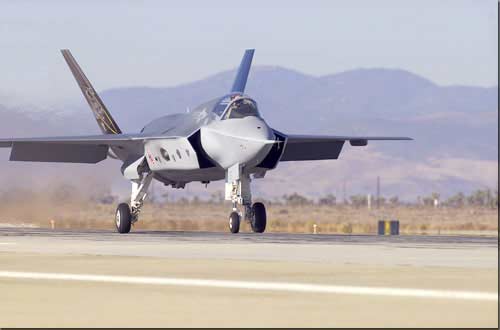
(What we're arguing about: An F-35C launched by EMALS at NAS Lakehurst, NJ - Look Mum, no Steam!)

It seems that the UK MoD's trials and tribulations with the 2012 Planning Round (PR12) which have been referred to here before, are now so serious that it can't be announced before the Easter recess. In other words, the MoD is tacitly accepting that it won't be able to start the 2012-13 financial year with a plan that is costed and deliverable.

Well done.

To the cynics out there who could point out that this is hardly anything new, you have a point. Indeed, it is so consistent with previous MoD fiascos that one could be forgiven for thinking that Liam Fox - he of the "broadly in balance" budget fiasco was still in charge.

Fortunately he isn't. But "Spreadsheet Phil" Hammond needs to get the budget balanced without undermining the UK's semblance of a strategy. And for as long as this involves the carrier programme, the correct answer is F-35C, EMALS and traps - a cheaper, less complex aircraft that takes twice the bombload half as far again, or half again as many bombs twice the range of the F-35B jumpjet.

If we're serious about Carrier Enabled Power Projection (CEPP), then the F-35C is the correct way forward. Find the money and move on.

(And if you're having difficulty with the money, you could always cancel Trident.)

Monday, November 21, 2011

Strategic Thinking on Trident Part I - Why?

 
(RNAD Coulport - where the UK's nuclear weapons are stored before being mated to Trident missiles)

What should the UK's future policy be on replacing of Trident? And how should the IAEA's November 2011 report on Iran affect the UK's position?

These aren't easy questions, going as they do to the core of what the UK's role in the world is / should be over the next 30 years, and what the British people are prepared to pay for this role. Indeed, if the last 30 years are any guide to the next 30, then UK politicians will find it far too easy to ignore the cost of their global ambitions, and in effect hoping that their unfunded strategic bluff will never get called.

Indeed, this was British policy in the 1920s under the so-called "10-year Rule", which postulated in Professor Vernon Bogdanor's words, "that they should plan on the assumption there would not be a war for the next 10 years because the view was that large armaments led to war - this was only abandoned in 1932." Helpfully, the 10-year rule was also much cheaper than rearmament. And arguably, (Afghanistan aside), the UK's 2010 Strategic Defence and Security Review (SDSR) has in effect attempted to reinstitute the 10-year rule with a strong focus on what it calls "Future Force 2020", in which painful cuts today will, in the words of the RAF PR machine lead to:

"The longer-term vision for the make up of our military – Future Force 2020 – will be secured by this one-per-cent-a-year real terms increase in the planned equipment and equipment support programme."

Except that there is little confidence that the money required is available, given that at the beginning of the SDSR process there was at least a £42bn hole in MoD's procurement finances in the period to 2020. Helpfully, much of the capital spending on the Trident spending would occur just beyond this horizon, and is thus helpfully excluded. Hence, a more realistic assessment of the position is that it is even more unhealthy than this looks.

The time for such a muddled "strategy" - if it ever existed - is well and truly over. Instead, what is required is a careful assessment of the what role the UK wants to play internationally, and how it should go about getting there from here - accepting that "here" is not an optimal starting point. Moreover, given that it will cost at least £25 - £30bn in capital spend between now and 2025, the replacement for Trident has a central role to play in any such discussion - something that Dr. Liam Fox MP as the Secretary of State for Defence at the time of SDSR explicitly overruled by insisting that Trident would be replaced (and implicitly, whatever other cuts were required would be borne to protect the Trident programme.) As we've seen, the required cuts were deep, wide-ranging and rushed: it is therefore of little surprise that in the next decade Britain's conventional forces will become dangerously unbalanced (e.g., an RN capable of deployed a carrier battle group sans aircraft, but only if they stopped doing almost anything else; no fixed-wing maritime patrol assets to support maritime ops; 14 extremely expensive PFI air-refuelling tankers and down to 8 squadrons of fast jets. And this is before we get to the Army...).

So what? And more importantly, so what about Trident?

Well, it's difficult. We'll come to that in Part II. But here's a teaser....

(USS Ohio SSBN-726 undergoing SSGN conversion. 
Note the former Trident tubes open behind the sail)

Sunday, October 9, 2011

Post SDSR - Implementation through PR11

 
(Hunter PR 11*. Like MoD PR 11 but much more elegant...) 

Planning Round 11 - PR11 
I accept that it's boring bureaucracy, but process is vital in Government, and never more so than when dealing with budgets and finance. What's critical to remember is that the settlement reached in a Comprehensive Spending Review (CSR) / Strategic Defence and Security Review (SDSR) is in a very meaningful sense Churchill's "End of the Beginning", rather that an end in itself: all that has been agreed at this point is the budget "envelope" within which the Department will have to operate for the length of the budget deal.

What then happens is the process of converting the CSR / SDSR settlement into something that actually can (at least theoretically) be implemented by the MoD. This is a critical, and often under-rated / misunderstood step - many a drip slip betwixt cup and lip and all of that. It is also where the painful decisions become crystallised - where the metaphorical rubber really does hit the road.

In the MoD a key part of this process is known by the catchy title of "Planning Round XX". This process costs lots of options, prioritises them, chooses which elements to fund and which cuts to make to make the proverbial quart fit into a pint pot, and ultimately spits out an answer that is the operational annual budget of the MoD; the work for next year is PR 11.

What was done?
The first pass results were announced by Liam Fox on 18 July 2011. As Chalmers points out, this is effectively another Defence Review less than a year after the SDSR was completed, underlining that the SDSR did not resolve the funding dilemma - and was therefore unimplementable. It is hard to imagine a more damning indictment of a review of SDSR's scale and ambition.

Some good news came in July - there was a planning commitment that the MoD equipment procurement and equipment support budgets would increase 1% in real terms from 2014/15. Of course, this is an attempt to bind a future spending review - and indeed a future Parliament in a way that A. V. Dicey et al would decry as unconstitutional interference with Parliamentary Sovereignty - which may or may not work; not the least reason is that if the economy doesn't turn around the pressure on the post-Afghanistan MoD budget will all be one direction.

In return for jam tomorrow, MoD has agreed to make what Chalmers calls "further difficult decisions on capability reductions, notably in Army personnel numbers." Specifically, this means bringing the Army down to 84,000 by 2020, a figure that was bandied about in the SDSR process. But the problem is that what these reductions are to be hasn't been announced, which implies that it hasn't - or at least the phasing and the force mix - hasn't been agreed. The answer to maintaining capability by cutting numbers is to shift to (cheaper) reservists from (expensive) regulars, with £1.5bn over the next decade to fund this. What impact £150m p.a. will have is not yet clear.

UK Future Capabilities Pit Falls Overspends

 (Type 26 Global Cocktail Party Platform Combat Ship)

 (F-35C Lightning II - shiney, American, over-budget, late)

 (RN Trident II-D5 SLBM Launch. No, you don't get to see the "cool" submarine thing.)

The most obvious risks in a strategic steady state - ie, without any new unplanned for threats or wars -  are the three biggest ticket items - replacement submarines for Trident, F-35 Lightning II strike fighters for the FAA and the RAF, and the future frigate, Type 26.

Trident is perhaps the easiest to discuss because it is so binary as a programme - it is largely independent of the rest of the MoD force structure in that though it has supporting assets, at a pretty profound level you either do Trident or you don't. And therefore you can consider the £30 - £100bn bill with a degree of isolation from the rest of the budget. It is also a significant technical risk given that it is a new UK submarine design, as with the unfortunately named "Astute" class, this is an area of significant weakness in the UK defence manufacturing base.

 (All of this for 20 sorties a day? Really? Really?!)

F-35C is connected to other programmes, most obviously the carrier. It is also different in that the UK is a bit part player in the US programme, and the US will make F-35 work for the USAF and the USN, because without it, their qualitative edge over "near peer" adversaries will erode. The cost, however, is vast, and initial (optimistic) UK procurement figures of 132-150 F-35s simply will not happen as the unit cost seems destined to be around the £100m mark. At that price, 60 airframes - or enough for just four 12 aircraft squadrons plus a training flight - is a £6bn+ programme - similar to the aircraft carriers.

It is easy to see why Chalmers cites an MoD decision to routinely deploy the UK carrier with only 12 aircraft (versus the 36 originally intended). Unfortunately, 12 aircraft the work of 36 cannot do, and the MoD has scaled back the sortie-generation requirement of the carriers from 72/day to 20. 20?! Given that the cost spiral and delayed service entry date for the F-35C was known and knowable in 2010, it is hard to understand how the carrier programme could have made prioritisation sense if it is only expected to produce 20 sorties per day. Charitably, all that can be assumed is that the planners were planning on having more than four squadrons of F-35C in total, making it more likely that the FAA could have 36 aircraft and crews trained and deployable. Except that if there are only four 12 aircraft squadrons in toto, this is not going to happen. From this, it is hard to understand why the UK is pursuing the carrier programme at all.

 
(Type 45: Stalin's maxim that "Quantity has a Quality all its own" doesn't work in reverse...)

Type 26 is much easier to argue for and against. The UK needs a new frigate. It is not clear that the UK needs to go to the trouble of developing one for what will never (sadly) be more than 20 hulls, and may well end up being half of that. Given that the Canadians are not interested in a collaborative programme, the Brazilians may buy one and then build their own, and there is lots of competition, it would surely make more sense for the UK to buy off the shelf from Europe (FREMM, Lafayette or F124 would do nicely). And before anyone shouts "HORIZON was a disaster", if we had proceeded with it, the RN should have been able to afford 9 or 10 instead of the 6 Type 45s they're going to operate at £1bn each.

Tough choices. But they need to be made if the UK is going to get maximum value for money from the small defence budget: MoD is not there to create or sustain jobs for BAES. 

So, with the greatest respect to Malcolm Chalmers, it is hard to see how he can conclude that, "the MoD now appears to be well on the way to closing its £74 billion funding gap" until the cuts are detailed and the numbers and the underlying assumptions can be independently verified (as the NAO is now empowered to do.) Let's see how they get on, but I'm a long way from convinced.
* Ok pedants, I know the RN used the Hunter PR 11s as trainers and not operationally, and that therefore they should probably been designated T(PR) Mk. 11 - or indeed T(PR) Mk. 12 as they were based on Hunter F Mk. 4 airframes, not the FGA Mk. 9 that begot the RN's GA Mk. 11. If this is a burning concern, I suggest you complain retrospectively to the Chief of Staff (Aviation and Carriers) and Rear Admiral Fleet Air Arm, as he's presumably less busy than he was, given the scrapping of the Harriers and the Carriers...

Thursday, January 27, 2011

UK: Is it time for a post-Trident future?

 
May 26, 2009 - HMS Victorious fires an unarmed Trident II-D5 SLBM

This is a post I've been mulling over for a while. Regular readers will have seen lots of posts on SDSR and the current orientation of UK defence and security policy, but nothing in depth on the budgetary elephant in the room - Trident, the UK's sole nuclear weapon / Weapon of Mass Destruction programme. (It's always struck me as amusing that "we" have nuclear or atomic weapons for "deterrence"; "they" (presumably North Korea, Iraq, Iran, Libya) have "WMD".)

In this first post, I'm going to canter through the "how we got here" elements of UK nuclear policy, and then I'll follow up with UK future nuclear choices.

Ancient History
The history of the UK's independent nuclear deterrent is well known. It started early in WWII with British and European emigres as Tube Alloys and became a junior partner at Las Alamos in the Manhattan Project; indeed, so the story goes, the code name meant that it was lost in the US Navy's archives for some months as the code name was assumed to be the (not very interesting) subject. After the end of the Pacific war, the US cut off nuclear cooperation in the 1946 McMahon Act, and an impoverished UK Labour Government under PM Clem Attlee and Foreign Secretary Ernie Bevin started an indigenous programme without bothering to tell the rest of the Cabinet, let alone Parliament or the British taxpayers.

The important question is Why?

The argumentation in 1946 was similar to today, and is impressively circular. 

1. Great Powers have the most advanced and most terrible weapons.
2. Nuclear Weapons are the most advanced and most terrible weapons.
3. The UK is a Great Power, therefore the UK must have nuclear weapons.

Or, in the words of Bevin at the time, "We've got to have this thing. I don't mind it for myself, but I don't want any other Foreign Secretary of this country to be talked at or to by the US Secretary of State as I have just been... We've got to have this thing over here, whatever it costs ... We've got to have the bloody Union Jack on top of it."

Canny readers will note the absence of anything to do with the Soviet Union - or, pace Jim Hacker, even the French. Since inception, UK nuclear policy and posture has been far more about perceptions of national standing than about military utility. As such, it plays on the most neuralgic elements of Whitehall's psyche - what Dean Acheson scathingly referred to in the 1960s as the result of "Britain losing an Empire and [being] yet to find a role".


(Why build one bomber when you can build three? Top to bottom, Victor, Valiant and Vulcan. Remarkably, all entered service. There was even a fourth prototype - the Short Sperrin - in case these three designs failed.)

In 1952, the UK thus became the third nation to conduct a nuclear detonation after Australian kindly volunteered the Monte Bello Islands as a nuclear test site, and in 1956-57 the UK and Australia followed up with a joint test series at Maralinga, South Australia. Combined with the development of the V-Bombers, the Royal Air Force fielded a nuclear strike force that would grow to more than 120 bombers by 1964. This was largely indigenous but there were some borrowed US freefall bombs and the RAF also operated 20 Squadrons of American Thor IRBMs between 1959-63. At the tactical level, the UK also developed the indigenous WE177 series of free fall atomic bombs and nuclear depth-charges. WE177s were in service from 1966 to 1998, and their retirement meant that Trident SLBMs are now the UK's only atomic weapons. 

The Polaris Sale Agreement, December 1962


(SuperMac hoodwinks Kennedy, or something.... Nassua, December 62)

Unfortunately, just as this massive investment was coming into service in 1960, Gary Powers inconsiderately got himself shot down over the USSR, and the threat from surface to air missiles (SAMs) made it increasingly unlikely that an independent UK bomber offensive against the Soviet Union would meet minimum UK deterrence - guaranteed destruction of Moscow, known in suitably Clancy-esque terms as "The Moscow Criterion". Therefore, the UK, which had terminated its' indigenous ballistic missile programme in 1960, attempted to buy missiles from the US for the bombers - the ill-fated Skybolt programme - and when Skybolt was cancelled by the US, PM Harold Macmillan sweet-talked President Kennedy into supplying Polaris submarine launched ballistic missiles (SLBMs) at Nassua in Dec 1962 immediately after the Cuban Missile Crisis.

The deal was that the UK would build the submarines and the warheads, crew the submarines and lease the missiles. (If you fire it, you pay for it. We know where you live.) In return, the UK would commit them to NATO under all circumstances except the undefined "supreme national emergency". Quite what this was or how it could break out without it being a reasonably serious day for NATO as a whole was never defined. 

(HMS Renown, a UK Polaris submarine. Dull. Much less interesting than shiny aeroplanes.)

From Polaris's introduction in 1969 onwards, the notion of the UK having an independent strategic nuclear capability was questionable. Could the UK fire some missiles without telling the US? Probably, and more importantly, the other side couldn't know that you couldn't or wouldn't, creating at least the potential for a second decision making hub and removing the fear of strategic decoupling - namely the European fear that the US may ultimately renege on the nuclear shield, and let conventional Soviet forces run riot in Europe as long as the Soviets didn't target American cities.

Chevaline to Trident
In US Navy service, Polaris was superseded by the longer-range Poseidon, and both were replaced by Trident I or II by 1992. In the UK, Polaris was retained, but the Moscow-criterion was under threat by the deployment of the Moscow Anti-Ballistic Missile (ABM) System, which used nuclear armed interceptor missiles (eek!) to knock out incoming ICBMs.


(Roan Antelope - Antelope Chevaline)

The UK therefore developed a series of decoys and penetration aids under Project Chevaline, keeping UK Polaris in service until the mid-1990s. Technically, Chevaline - so named because an official rang London Zoo asking for the name of a large antelope - was a fiasco, running a decade late and £1bn (in 1979 money - £3.6bn today) overbudget, not a penny of which was disclosed to Parliament under either successive Conservative, Labour or Conservative administrations. In fact, so great was the Parliamentary outcry when the costs and disaster that was Chevaline came out, that it led Parliament to instruct the UK National Audit Office to produce an oversight report, now called the Major Projects Report.


Policy Implications

The crucial point is that the UK's "independent" nuclear deterrent since 1969 has been continuously reliant on the US for production, testing, engineering support and development work in support of this "independent" deterrent. There have been benefits on both sides - the UK saved a colossal amount of money by buying American rather than following the French route and building it all at home. And the US shared the costs of the missile section of the submarines - the Common Missile Compartment, CMC - as well as effectively gaining an additional ballistic missile submarine on patrol that someone else was paying for.

But in my view, the undisclosed price the UK paid was the fear that the US would cut nuclear cooperation a second time meant that UK foreign policy options were constrained for fear of offending the USA. As a result, the paradox of the independent nuclear deterrent was that it appears to have seriously constrained independent UK foreign policy.

Tomorrow, we'll look at the current situation, and the costs and options for future UK nuclear policy.