It's September. And at this time of the year, I'm always having two thoughts close to the front of my mind: the natural phenomena of fall in Vermont and LibDem Annual Conference.
This year, LibDems are in Glasgow - a hop, skip and a jump from HM Naval Base Clyde, the home of the UK Trident fleet - and will be discussing the future of Trident for the LibDem's next manifesto. I have written a primer for BASIC on the choices, which will be published next week. As you would expect, it draws heavily on the Trident Alternatives Review and on the work CentreForum did last year.
My thoughts are relatively simple, and are based on a three point premise:
- That the UK is not currently, and is unlikely to become in the foreseeable future, short-notice direct nuclear threat;
- That there is unlikely to be a significant increase in the UK defence budget, or a substantial reduction in the UK's national ambition abroad;
- That NATO will continue to offer the level of nuclear deterrence the UK requires.
Taken together, this means that the UK faces a choice on the sort of military capability it would like to have from now until the the late 2030s, and therefore, what a key component of the UK's "Hard Power" looks like over the same period. Against this backdrop, the question is one of choices: does the UK want to revamp the conventional forces, or does it want to have Trident (and very much smaller / equipped with older kit) conventional forces?
It is important not to obscure this question within an argument about Trident with or without Continuous At-Sea Deterrence (CASD). The reality is that removing CASD as a readiness requirement and going over to two or three SSBNs instead of four saves £4 - 8bn over 30 years, or about 3.5 - 7% of the total budget to the 2050s, with the costs in the early years similar (they reflect R&D and the early builds). This means that the opportunity costs to the conventional forces are essentially identical, making the choice relatively binary in financial terms.
Strategically, non-CASD Trident there are also major problems; the question of crisis instability (what happens if you don't have CASD and need to sail an SSBN at a time of tension.... raising tensions!) will only be definitively answered when someone tries it in a crisis.
Similarly, the unspoken proposal to share deterrent patrols with the French (who could then reduce their number of submarines, too) is also ridiculous. Would a British Government really consent to Paris firing a British Trident at a target of France's choosing when our national interests were not engaged? And in the unlikely event that a British Government would, what are the chances of an adversary having enough fear that this could happen to be deterred? (I strongly doubt that the French would be up for the reverse situation, either....)
So, do we want to spend the money on Trident or on the conventional forces? I will vote for the conventional forces everytime, and in the debate on the 17th of September.
(Philip Hammond: likely to make sure a balance sheet does. Good for him!)
Parliament rises on the 26th of March - it's taking a break until the 16th of April for Easter and constituency business. And before the Recess, it is expected that Secretary of State for Defence Philip Hammond will address the Commons to announce the outputs of the 2012 MoD Planning Round (known as PR12) and explain how the MoD's budget has been trimmed from Liam Fox's being "broadly in balance" to actually, well, er, actually being in balance. And to do so with no increases in funding, and presumably with no clear source of magic pixie dust that reduces the costs of military equipment.
In other words, there are going to be more cuts. In fact, I hear that something like between £3bn and £5bn is likely to be cut from the forward programme. We look forward to understanding how this is going to work out - it is most likely that this will not be outright cancellation of existing contracts (gets very expensive) but is much more likely to be those projects that haven't been signed - but which the forces are expecting to get. Ouch.
Let's see what they come up with - but it makes the case for retaining the Trident replacement programme at £25 - £33bn whilst taking more cuts in the conventional forces ever weaker.
(Shameless self promotion, I know... deal with it!)
Forgive my lack of posting - I've been totally consumed by getting CentreForum Trident paper finished. And now it is - you can get it here - and there's been lots of interesting media coverage. I'm deeply indebted to many people - the acknowledgements are there for a reason - but the one I most liked was from the UK communist Morning Star; only the comrades know the truth. (NB Irony Alert!) We also made the wonderful ArmsControlWonk - with thanks to Dr. Jeffrey Lewis.
(We are here. Infidels are here, here and here. Apostates over there. Good. Points? Questions?)
Those kray-zee Iranians.
Just when Christmas television looked like getting everyone down, up popped the comedy act that is North Korea* to entertain us with their choreographed grief (though believe me, if I were living in Pyongyang, I'd have cried and wailed with the best of them just in case someone decided that I had been insufficiently upset and felt that a little reeducation was in order.)
Not to be outdone by their former colleagues in the Axis-of-Evil, Iranian Admiral Habibollah Sayyari says it would be "very easy" for his navy to shut down the Strait of Hormuz (SoH) if the nasty west (and especially the nasty EU led by the confounded British, whose hand is behind everything bad in the Islamic Republic, I'm reliably informed) has the temerity to impose oil sanctions on Iran for its repeated violations of the NPT, which the IAEA noted in their 18 Nov 11 Resolution. And here's a nice piece from the good people at APM's Marketplace - they do a great daily podcast, too.
Excellent, certainly a move that's all about the spirit of the season, and likely to bring everyone together and allow us all to get along better and all of that.
But is it feasible?
(Ah. Rather narrow then.)
The strait is about 34nm across at it's narrowest point, and more importantly, the commercial traffic goes through the two 2nm corridors marked on this helpful map. And given the major Iranian naval base at Bandar Abbas is nice and close, in principle Iran's two naval arms - IRIN and the IRGC(N) - could make a stab at "closing" the SoH if they so chose. However, this overlooks a couple of things.
First, legality. Such a blockade would be illegal (states have the right to peacefully sail through straits worldwide) - something established in customary international law and in the 1948 ICJ Judgement in the Corfu Channel case - unless it was an act of war. An Iranian declaration of war against the rest of the world seems somewhat unlikely, and so in the absence of a UNSCR allowing for Iran to close the SoH (inconceivable), then the Iranians would be acting illegally.
Second, actual capability. Does Iran really want to take on the US Navy and her allies in a shooting match in the SoH whether on the water or from shore based missile and artillery batteries (or both?)? I can't see it - the Iranians could get lucky and cause some damage to naval vessels escorting oil tankers or patrolling the Straits - but the risk of retaliation sinking the rest of your fleet (or worse, starting a broader war) is such that you'd have to be nuts to try it. And this blog (at least) doesn't think that the Iranian regime irrational - more than anything else, it is solidly focused on it's own survival.
So, nothing to see here - let's all get back to the Christmas specials on telly. But not a clever move by the Iranians, and I suspect, not one that they're going to enact, irrespective of their domestic posturing.
Finally, in the spirit of goodwill to all men, in the unlikely event that this does kick off, please don't ask the Royal Navy how many spare ships it has to send out to help out in the SoH. You may get an answer similar to asking the RAF how many maritime patrol aircraft they can quickly send. Seen from here, the choices made in SDSR 2010 are looking less clever by the month.
*As long as you don't live in it or near it, clearly.
(RNAD Coulport - where the UK's nuclear weapons are stored before being mated to Trident missiles)
What should the UK's future policy be on replacing of Trident? And how should the IAEA's November 2011 report on Iran affect the UK's position?
These aren't easy questions, going as they do to the core of what the UK's role in the world is / should be over the next 30 years, and what the British people are prepared to pay for this role. Indeed, if the last 30 years are any guide to the next 30, then UK politicians will find it far too easy to ignore the cost of their global ambitions, and in effect hoping that their unfunded strategic bluff will never get called.
Indeed, this was British policy in the 1920s under the so-called "10-year Rule", which postulated
in Professor Vernon Bogdanor'swords, "that they should plan on the assumption there would not be a war for the
next 10 years because the view was that large armaments led to war -
this was only abandoned in 1932." Helpfully, the 10-year rule was also much cheaper than rearmament. And arguably, (Afghanistan aside), the UK's 2010 Strategic Defence and Security Review (SDSR) has in effect attempted to reinstitute the 10-year rule with a strong focus on what it calls "Future Force 2020", in which painful cuts today will, in the words of the RAF PR machine lead to:
"The longer-term vision for the make up of our military – Future Force
2020 – will be secured by this one-per-cent-a-year real terms increase
in the planned equipment and equipment support programme."
Except that there is little confidence that the money required is available, given that at the beginning of the SDSR process there was at least a £42bn hole in MoD's procurement finances in the period to 2020. Helpfully, much of the capital spending on the Trident spending would occur just beyond this horizon, and is thus helpfully excluded. Hence, a more realistic assessment of the position is that it is even more unhealthy than this looks.
The time for such a muddled "strategy" - if it ever existed - is well and truly over. Instead, what is required is a careful assessment of the what role the UK wants to play internationally, and how it should go about getting there from here - accepting that "here" is not an optimal starting point. Moreover, given that it will cost at least £25 - £30bn in capital spend between now and 2025, the replacement for Trident has a central role to play in any such discussion - something that Dr. Liam Fox MP as the Secretary of State for Defence at the time of SDSR explicitly overruled by insisting that Trident would be replaced (and implicitly, whatever other cuts were required would be borne to protect the Trident programme.) As we've seen, the required cuts were deep, wide-ranging and rushed: it is therefore of little surprise that in the next decade Britain's conventional forces will become dangerously unbalanced (e.g., an RN capable of deployed a carrier battle group sans aircraft, but only if they stopped doing almost anything else; no fixed-wing maritime patrol assets to support maritime ops; 14 extremely expensive PFI air-refuelling tankers and down to 8 squadrons of fast jets. And this is before we get to the Army...).
So what? And more importantly, so what about Trident?
Well, it's difficult. We'll come to that in Part II. But here's a teaser....
(USS Ohio SSBN-726 undergoing SSGN conversion.
Note the former Trident tubes open behind the sail)
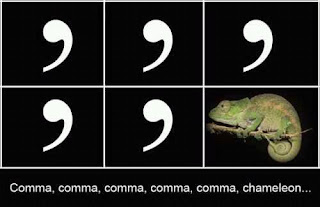
(Commas are important. And box two contains a chameleon; do keep up at the back.)
Grammar? Oh dear.
At the risk of dredging up bad memories for an entire generation, (myself included), I'm sorry to confirm that our 4th-grade teachers were correct: grammar matters. And it is especially important to lawyers when it comes to interpreting legislation and Treaties. For international law, the sacred text in interpreting treaties is itself a Treaty - the 1969 Vienna Convention on the Law of Treaties (VCLT) which came into force in 1980.
"Each of the Parties to the Treaty undertakes to pursue negotiations in good faith on effective measures relating to cessation of the nuclear arms race at an early date and to nuclear disarmament, and on a treaty on general and complete disarmament under strict and effective international control."
This is a very long sentence. With a single comma.
It could be interpreted in a couple of ways:
First, it could mean that State Parties are are obliged to
pursue good faith negotiations on ceasing the nuclear arms race, and
nuclear disarmament as well as pursing a treaty on general disarmament under strict and effective international controls.
Second, it could mean that the State Parties are obliged to pursue good faith negotiations on ceasing the nuclear arms race, and nuclear disarmament within the context of a treaty on general disarmament under strict and effective international controls;
Grammatically, the first interpretation makes more sense than the second, because the comma separates the first clause
"negotiations in good faith on effective measures relating to
cessation of the nuclear arms race at an early date and to nuclear
disarmament,"
from the second
"and on a treaty on general and complete disarmament under strict and effective international control"
making it clear that the two are separate notions.
This construction would mean that the Nuclear Weapons States (NWS) were obliged to disarm independent of a treaty on general disarmament. Under this understanding, it would hard to argue that spending £30bn - £100bn between now and 2042 on a replacement for Trident would qualify as "nuclear disarmament", and that as such, such a purchase would be in direct contravention to the UK's international obligations, and would therefore be illegal as a matter of British law.
Unsurprisingly, perhaps, the UK Government favours the second interpretation, tying as it does nuclear disarmament to a future treaty on "general and complete disarmament". As this happy state of affairs is yet to occur (CCW, CWC and BWC notwithstanding) - and the use of the modifier "complete" sets the bar extremely high - so the logic goes, there is no requirement for nuclear disarmament, however desirable this may be. Conveniently, the second formulation does not make it illegal to procure a replacement to the existing UK Trident SLBM system.
(Minimum deterrence looks a lot like maximum deterrence but with fewer missiles.)
But what's interesting is that over the last decade or so, UK Governments have clung to their tortuous grammatical interpretation whilst publicly demonstrating that the UK is making reductions in its nuclear forces (even as they spend £1bn per annum to reinvigorate the AWE Aldermaston nuclear weapons design and production infrastructure). This appears to be an odd halfway house, as it attempts to demonstrate that the UK is moving towards nuclear disarmament whilst retaining what Whitehall describes as a "minimum credible deterrent".* Moreover, to scrub up its disarmament credentials, the UK draws attention
to its ratification of the Comprehensive Test Ban Treaty (CTBT), and
the fact that irrespective of the stalled Fissile Material Cut-Off Treaty
(FMCT), the UK is no longer producing fissile material for military
purposes.**
Indeed, the UK Foreign Office goes so far as to describe the impact of the 2010 Strategic Defence and Security Review (SDSR) thus:
"In this Review the Prime Minister, David Cameron, and Deputy Prime
Minister, Nick Clegg, committed the UK to maintaining a credible
deterrence by:
reducing the number of warheads onboard each submarine from 48 to 40
reducing our requirement for operationally available warheads from fewer than 160 to no more than 120
reducing our overall nuclear weapon stockpile to no more than 180
reducing the number of operational missiles on each submarine
These reductions illustrate that whilst the UK believes in
maintaining a minimum credible deterrent this is kept constantly under
review and is fully in line with our international obligations under the
Nuclear Non-Proliferation Treaty."
But it is onlyin line with the UK's "international obligations under the
Nuclear Non-Proliferation Treaty" if the second, grammatically tortuous, interpretation of NPT Art VI is accepted.
So who is right? And does it matter?
On which interpretation is correct, I'm not sure yet. But it certainly matters, as if the first interpretation is correct, then the UK Government could find themselves explaining a breach of their international obligations. Against this backdrop, I'm very much looking forward to reading Daniel Joyner's new book, especially after some of the critical reviews. I'll write again when I've read it and reflected.
* As mentioned before this blog does not accept the bald assertion that the UK Trident system currently deters anyone or anything, and therefore doesn't use the term.
** The cynics may observe that it's easy to be in favour of a narrow FMCT if you've got all the highly enriched nuclear fuel that you would ever need on hand, especially if it is already outside of IAEA safeguards.
(Hunter PR 11*. Like MoD PR 11 but much more elegant...)
Planning Round 11 - PR11
I accept that it's boring bureaucracy, but process is vital in Government, and never more so than when dealing with budgets and finance. What's critical to remember is that the settlement reached in a Comprehensive Spending Review (CSR) / Strategic Defence and Security Review (SDSR) is in a very meaningful sense Churchill's "End of the Beginning", rather that an end in itself: all that has been agreed at this point is the budget "envelope" within which the Department will have to operate for the length of the budget deal.
What then happens is the process of converting the CSR / SDSR settlement into something that actually can (at least theoretically) be implemented by the MoD. This is a critical, and often under-rated / misunderstood step - many a drip slip betwixt cup and lip and all of that. It is also where the painful decisions become crystallised - where the metaphorical rubber really does hit the road.
In the MoD a key part of this process is known by the catchy title of "Planning Round XX". This process costs lots of options, prioritises them, chooses which elements to fund and which cuts to make to make the proverbial quart fit into a pint pot, and ultimately spits out an answer that is the operational annual budget of the MoD; the work for next year is PR 11.
What was done?
The first pass results were announced by Liam Fox on 18 July 2011. As Chalmers points out, this is effectively another Defence Review less than a year after the SDSR was completed, underlining that the SDSR did not resolve the funding dilemma - and was therefore unimplementable. It is hard to imagine a more damning indictment of a review of SDSR's scale and ambition.
Some good news came in July - there was a planning commitment that the MoD equipment procurement and equipment support budgets would increase 1% in real terms from 2014/15. Of course, this is an attempt to bind a future spending review - and indeed a future Parliament in a way that A. V. Dicey et al would decry as unconstitutional interference with Parliamentary Sovereignty - which may or may not work; not the least reason is that if the economy doesn't turn around the pressure on the post-Afghanistan MoD budget will all be one direction.
In return for jam tomorrow, MoD has agreed to make what Chalmers calls "further difficult decisions on capability reductions, notably in Army personnel numbers." Specifically, this means bringing the Army down to 84,000 by 2020, a figure that was bandied about in the SDSR process. But the problem is that what these reductions are to be hasn't been announced, which implies that it hasn't - or at least the phasing and the force mix - hasn't been agreed. The answer to maintaining capability by cutting numbers is to shift to (cheaper) reservists from (expensive) regulars, with £1.5bn over the next decade to fund this. What impact £150m p.a. will have is not yet clear.
UK Future CapabilitiesPit Falls Overspends
(Type 26 Global Cocktail Party Platform Combat Ship)
(F-35C Lightning II - shiney, American, over-budget, late)
(RN Trident II-D5 SLBM Launch. No, you don't get to see the "cool" submarine thing.)
The most obvious risks in a strategic steady state - ie, without any new unplanned for threats or wars - are the three biggest ticket items - replacement submarines for Trident, F-35 Lightning II strike fighters for the FAA and the RAF, and the future frigate, Type 26.
Trident is perhaps the easiest to discuss because it is so binary as a programme - it is largely independent of the rest of the MoD force structure in that though it has supporting assets, at a pretty profound level you either do Trident or you don't. And therefore you can consider the £30 - £100bn bill with a degree of isolation from the rest of the budget. It is also a significant technical risk given that it is a new UK submarine design, as with the unfortunately named "Astute" class, this is an area of significant weakness in the UK defence manufacturing base.
(All of this for 20 sorties a day? Really? Really?!)
F-35C is connected to other programmes, most obviously the carrier. It is also different in that the UK is a bit part player in the US programme, and the US will make F-35 work for the USAF and the USN, because without it, their qualitative edge over "near peer" adversaries will erode. The cost, however, is vast, and initial (optimistic) UK procurement figures of 132-150 F-35s simply will not happen as the unit cost seems destined to be around the £100m mark. At that price, 60 airframes - or enough for just four 12 aircraft squadrons plus a training flight - is a £6bn+ programme - similar to the aircraft carriers.
It is easy to see why Chalmers cites an MoD decision to routinely deploy the UK carrier with only 12 aircraft (versus the 36 originally intended). Unfortunately, 12 aircraft the work of 36 cannot do, and the MoD has scaled back the sortie-generation requirement of the carriers from 72/day to 20. 20?! Given that the cost spiral and delayed service entry date for the F-35C was known and knowable in 2010, it is hard to understand how the carrier programme could have made prioritisation sense if it is only expected to produce 20 sorties per day. Charitably, all that can be assumed is that the planners were planning on having more than four squadrons of F-35C in total, making it more likely that the FAA could have 36 aircraft and crews trained and deployable. Except that if there are only four 12 aircraft squadrons in toto, this is not going to happen. From this, it is hard to understand why the UK is pursuing the carrier programme at all.
(Type 45: Stalin's maxim that "Quantity has a Quality all its own" doesn't work in reverse...)
Type 26 is much easier to argue for and against. The UK needs a new frigate. It is not clear that the UK needs to go to the trouble of developing one for what will never (sadly) be more than 20 hulls, and may well end up being half of that. Given that the Canadians are not interested in a collaborative programme, the Brazilians may buy one and then build their own, and there is lots of competition, it would surely make more sense for the UK to buy off the shelf from Europe (FREMM, Lafayette or F124 would do nicely). And before anyone shouts "HORIZON was a disaster", if we had proceeded with it, the RN should have been able to afford 9 or 10 instead of the 6 Type 45s they're going to operate at £1bn each.
Tough choices. But they need to be made if the UK is going to get maximum value for money from the small defence budget: MoD is not there to create or sustain jobs for BAES.
So, with the greatest respect to Malcolm Chalmers, it is hard to see how he can conclude that, "the MoD now appears to be well on the way to closing its £74 billion funding gap" until the cuts are detailed and the numbers and the underlying assumptions can be independently verified (as the NAO is now empowered to do.) Let's see how they get on, but I'm a long way from convinced.
* Ok pedants, I know the RN used the Hunter PR 11s as trainers and not operationally, and that therefore they should probably been designated T(PR) Mk. 11 - or indeed T(PR) Mk. 12 as they were based on Hunter F Mk. 4 airframes, not the FGA Mk. 9 that begot the RN's GA Mk. 11. If this is a burning concern, I suggest you complain retrospectively to the Chief of Staff (Aviation and Carriers) and Rear Admiral Fleet Air Arm, as he's presumably less busy than he was, given the scrapping of the Harriers and the Carriers...
(Ministry of Deficits? Not quite an anagram, but there you are...)
Prof. Malcolm Chalmers of the Royal United Services Institute (RUSI, MoD's favourite thinktank) published a new paper this week on UK Defence spending, and it makes interesting reading. In this post, we'll look at what was said about the numbers and the Strategic Defence and Security Review (SDSR); in the next one, we'll look at implementation through Planning Round 2011 (PR11).
Labour's Legacy
The first (and most important) point is that the the out-going Brown Administration left the MoD in a terrible positon. Depending on how you ask the question, the scale of the 10-year budget shortfall between 2010-11 and 2020-21 was either £27bn (a difficult £2.7bn p.a. - or roughly 8% of the MoD's baseline budget) if you allowed for 1.1% real growth, or a terrifying £51bn (an impossible £5.1bn p.a. or more than 14% of the annual budget) if the budget had been maintained at 2010-11 in real terms. And these were estimates which assumed that this programmes in the budget would (for the first time) run on time and to budget. (Ah. Ish?)
(Bob Ainsworth MP, Labour's last Defence Secretary - "ineffective" might be the politest word.)
In fact, despite Labour's recent attacks on the Government over the cuts, for Labour to close this funding gap, spending would have had to increase at at least 2.2% per annum for the next decade. Ignoring austerity and the fiscal realities that go with this, this is a level of increase unknown since 1985, and more than twice the 1.1% growth that they actually invested over the course of their 13 years in power. As Chalmers notes,
"... as a result, the MoD found it increasingly difficult to fit an ambitious forward programme within a much less ambitious – albeit still slowly growing – budget."
Indeed. Worse, Labour in general and Bob Ainsworth in particular made a number of pledges to purchase equipment late in the Brown Administration that sounded good - e.g. another 22 Chinook helicopters - when they must have known that there was no money to pay for them. This was either breathtakingly cynical politics of the worst kind, (with the results measured in the dead and maimed), or it demonstrated a criminally complete lack of knowledge, competence, control and responsibility. Either should have been a resigning - or sacking - matter.
So not only should Labour apologise for their past record, they should also probably shut up about the whole thing for a decent period, until they've actually got a grip on the big questions (e.g. UK's role in the world, Trident, funding this defence business).
May 2010 - A new dawn. (Or at least a Defence Review)
(We're on the same side. Honest.)
SDSR was the long overdue defence review that built on the hodgepodge of the period since the 1998 Strategic Defence Review (SDR 98) and 2002's New Chapter. And the £51bn hole in the budget over the next decade needed to be addressed at a time of an unprecedented fiscal squeeze. Enter Liam Fox, stage right.
But austerity isn't fun, as the current Government is finding out. Liam Fox successfully fought for a smaller cut than the Treasury wanted, but was only partially successful. Defence did do comparatively well - it had an 8.5% real terms cut by 2014-15 rather than the 10-15% that most external observers were expecting; at some level this is a comparative triumph. However, this was on top of the £51bn that MoD was already in hole over the next decde, and led to two problems.
First, due to the 8.5% cut that the MoD received in the austerity budget of the 2010 Comprehensive Spending Review, the 10-year deficit increased to an eye-watering £74bn.
Second, the Treasury (very sensibly, in my view) got the funding of Trident replacement back into the defence budget, rather than being a freebie provided by the Treasury. This added between £25bn and £50bn to the Departmental deficit through to 2030 - and as the majority of these costs come after 2020-21, they are not included in the £74bn figure. It can be inferred that HMT was trying to achieve two things - first, not to pay for it, and second to make Trident compete against other defence priorities. The first worked beautifully, but the second failed, as Liam Fox moved Trident into the untouchable box, significantly decreasing the flexibility of the overall budge - by at least £7bn over the years to 2020.
Clearly something had to give. Actually, quite a lot of somethings had to give; here's a flavour.
(Nimrod MRA4: all 11 scrapped to save £200m p.a. after spending £4bn. Would have been quite useful, too.)
(Type 22/3 frigate HMS CUMBERLAND - first UK ship to Libya, scrapped on return.* The other three 22/3s went too, taking the surface fleet to 19 FF/DD - compared to 35 in 1998, and 65 in 1982's Falklands War.)
(Harrier GR9 - more mourned by RN rather than RAF, as it ended UK carrier ops until 2022(ish). (Maybe).)
(CVS HMS ARK ROYAL - scrapped, along with her jets.)
(Sentinel R1 - brand new, now permanently deployed to Afghanistan, to be scrapped in 2015)
The eagle-eyed amongst you will note that there is not heavy on land forces - the Army and Royal Marines were largely left alone until after the withdrawal from Afghanistan that has been pencilled in for 2014. This will move the subsequent pain for them until the defence review after the 2015 election. And this ignore the 40,000 MoD civil servants and 22,000 servicemen and women who will lose their jobs in the next three years, along with a slew of new programmes.
(Truth is stranger than fiction...)
SDSR Process
So how did this happen? And why were such apparently random choices made, such that the RN will have one and a spare aircraft carrier, (with no aircraft - cunning, huh?), and the RAF has so many PFI-funding air refuelling tankers that they will have nearly two per fast-jet squadron? Some of the answer will be in the process.
It was long suspected, but Chalmers' paper is the first time that I've seen it (semi-officially) confirmed that the MoD was deeply engaged in Op OSTRICH, ignoring the HM Treasury's (HMT) request that all Departments study the impact of 10% and 20% cuts in their budgets. Until the last three weeks of the Review, MoD appears to have had a single case of 3% cut, and MoD
"believed – or at least hoped – that the Treasury was bluffing, and presented no detailed plan for how to make steeper reductions."**
Ah. Taking on HMT in a game of chicken is always a cunning plan. They will blink! Until they don't. Oh. The effect was predictable... Chalmers again:
"... [this] had the effect of increasing total ten-year required savings by £17 billion. This not only required much deeper savings in 2013/14 and 2014/15, a challenge which the MoD has still not fully been able to meet. As importantly, it reduced the baseline for spending levels for the rest of the decade."***
The MoD may cry foul and grumble about mixed political messages, but the reality is that probably didn't believe things could get this bad, and the culture in the MoD meant that the level of prioritisation that would've been required simply didn't exist, as the subsequent Levene Review into Defence management found. This set the stage for the final stages of the SDSR debacle.
(They have to agree as well, you know....)
SDSR Endgame
Chalmers recounts the MoD's long term plan to meet the Treasury's numbers was intertwined with the repatriation of the Army units from Germany. This would've seen the Army reduced by 20,000 to 82,000 by 2020 primarily by withdrawing from Germany without replacing those numbers - the point being that building a significantly increased infrastructure for the returning Army units would have been prohibitively expensive, which is the primary reason that it hasn't happened since the end of the Cold War. An elegant administrative solution.
Except that Number 10 didn't buy it.
Essentially, No 10 wouldn't go for cuts in the Army whilst there was a war on in Afghanistan. In fact, there were some cuts - 7% of the Army's regular strength to 95,000 by 2015 - but the weight of the cuts went on the RN (14% personnel cuts) and the RAF (17%). It was also in this end game that Nimrod / LRMPA and Carrier Strike (HMS ARK ROYAL and the Harrier GR9s) were binned without replacement. There is reportage that this was all a last minute fix to save the Tornado GR4 strike aircraft instead of the Harrier GR9s achieved by an RAF end-run, but even if true, in operational terms it was probably the correct decision.
All that was left was for the senior leadership to trumpet the strategic nature of the SDSR. But the façade cracked under the internal contradictions - aircraft carrier minus aircraft, doing the same or more with less.
The bigger problem was that all of this pain still didn't close the £74bn gap. This would be the job of PR11, of which more shortly.
*I'm told it is possible to take a phot of a ship without it wiggling about at high speed, but as I was repeatedly told, (as your author is a slow learner) "Tobbes, what's the point of that?"
(6 Sqn RAF Typhoon* from RAF Leuchars: low, fast, agile. MoD budget: low.)
Against a backdrop of the Royal Navy's redundancies last week, there's been some interesting work coming out of the Royal United Services Institute (RUSI, MoD's favourite thinktank) this week from the estimable Malcolm Chalmers on defence spending. Prof. Chalmers' paper is here, and I'll comment on it in detail over the next few days.
The real questions remain around whether the budget is under control, and whether the reduced capability of the UK forces has been matched with a reduced level of political intent to use military force. (Oops. More complex, that.)
No Fly Zones sound impressive. And indeed, they can be! Lots of jets patrolling the skies and stopping nasty dictators (e.g. Saddam Hussein) from using air power to schwack good guys (e.g. Kurds) at little cost and virtually no risk to our servicepeople. Much better than the dirty, dangerous expensive business of putting soldiers on the ground in unfamiliar countries with language and cultural barriers to fight someone else's war. In this sense, the NFZ is the epitome of modern gesture politics - a modern equivalent of sending a gunboat - looks great, little if any risk to us, and satisfies the dangerous disease of "do-somethingitis" that often infects politicians. ("Something must be done!" etc etc)
NFZs for humanitarian purposes are apparently legally convenient: the Northern and Southern Iraqi NFZs were not directly covered by a UN Security council Resolution. UNSCR 688 didn't expressly authorise them, and no-one (with the possible exception of the Iraqi regime) seemed to mind too much, even when it came to so-called "Response Options" which were preplanned attacks in response to Iraqi air-defence activity. Better, over the period of 12 years and more than 180,000 sorties, no manned coalition aircraft were shot down. So, an NFZ appears to provide a low-cost effort for policing - a policy initially proposed by Winston Churchill in the 1920s.
Jolly good.
(S-300PMU-2 / SA-20 GARGOYLE: An issue)
But there are issues. Specifically, there is the Libyan integrated air defence system (IADS), which in all likelihood would have to be deactivated / destroyed before any serious NFZ partoling could get underway. According to Wikipedia the IADS may include S-300PMU-2 / SA-20 GARGOYLE, which is a rather dangerous issue. As in a Corporal Jones "Don't Panic" dangerous sort of an issue....
(Libyan Mi-35 HIND. Bad news if you're a protestor - photo by Chris Lofting)
Second, the real threat to the Libyan civilians /protesters / rebels is from ground forces operating with helicopters much more than jet fighter-bombers (FJs). And as finding and shooting down low-flying helicopters is a non-trivial task, implementing an NFZ that stops helicopters flying requires 24-hour coverage, or the political will to disable or destroy the Libyan AF on the ground.
Third, this means that we're into air attacks against Libyan armed forces targets, so why not be effective by bombing the tanks, artillery and armoured personnel carriers that are being used against the non-Gaddafi forces. Which runs the serious risk - which needs to be acknowledged up front and addressed - that in imposing an NFZ we are on a slippery slope to actual humanitarian intervention on the side of the anti-Gaddafi forces. On this basis, we'd be well advised to just fess up and get on with it robustly - whilst robustly defending the legality of the intervention. More force sooner to remove Gaddafi's regime will save more lives, so if the international community is serious about it, let's get on with it.
("Now Dave, have you really thought through this 'No Fly Zone' business...?")
All of which seems to have missed British Prime Minister David Cameron when he proposed an NFZ, leading to the humiliation by US Secretary of Defense Bob Gates (seen chatting with "call me Dave" above in 2010) to basically rubbish it as "loose talk" (Ouch!). Why does Gates' view matter? Um, because the UK cannot begin to think about establishing an NFZ without the US. (Especially now after the continuing cuts following the SDSR.) In fact, no-one can - any NFZ will be US-led as only the USAF and the US Navy have the capacity and the capability to do it.
So by all means have an NFZ, preferably under UN, Arab League, African Union or even conceivably OIC auspices. But to be effective in saving Libyan lives by removing this awful regime, invoke the humanitarian exception to the Art 2(4) prohibition on the use of force and attack Gaddafi's instruments of repression.
(A good book. In fact, a great book - go read it.)
In part one and two of these random musings (do they qualify for capital R and capital M at this point? I leave that to you, dear reader...) we looked at the history and the future choices for the UK nuclear weapons. Now, enough of my quasi-academic pontification: what would I actually *do* if I were in charge? And Why?
The first point is that though the world is an unstable place with active proliferation attempts by non-nuclear States that are not UK or western-aligned, it is not clear that the Irans or North Koreas of this world have either the capability or intent to attack the UK with a nuclear armed missile, nor is it clear that they are not deterred by the US nuclear guarantee to NATO.
Really? What surely they're all crazy mullahs / mad Stalinists?
Well, let's assume that Iran successfully builds a nuclear weapon, and successfully integrates it with one of their current missile systems - e.g. Shahab-3 or the Ghadr-110, and then moved these missiles up to NW Iran, could they even hit the UK?
Courtesy of Great Circle Mapper (hours of fun!), here's the range of the 1200nm Shahab-3 (Meteor-3) from Tabriz:
And here's the 3,000km range of the Ghadhr-110:
As you can see, neither can hit the UK, though if they were accurate enough, they could hit Cyprus with the UK's Sovereign Base Areas. I've no idea of the Circular Error Probable over the 780nm from Tabriz to Akrotiri - but given that the Iranian attacks on Baghdad (and vice-versa) during the "War of the Cities" was not notably precise (not surprising as the SS-1 SCUD derivatives used - themselves derived from Hitler's WWII V-2 rockets - are prone to wander off by themselves), it is asking a lot of Iranian missile design to be able to develop a precision strike capability to hit Akrotiri today. As range increase, accuracy falls away sharply, so I would predict that hitting Rome with a Ghadhr-110 will be something of a crapshoot from Tabriz.
Of course, it is likely that given time, money and imported technology from wherever, the Iranians could produce a longer range missile. And according to Wikileaked US State Department cables, Iran has some 19 North Korean BM-25 Musudan missiles, with a range of 4,000km / 2,485 miles. Fired from Tabriz, BM-25 could, theoretically hit Heathrow 2,424 miles away.
(And no, this blog is not advocating urban regeneration of Hounslow and Feltham by Iranian missiles irrespective of how desirable such regeneration may be.)
All of which assumes that the Iranians and North Koreans would want to.
And that's the crux: If Iran had the capability, and was able to prepare and launch a BM-25 with a nuclear warhead against London, and did so, then Article V of the North Atlantic Treaty - all of that armed attack on one is an attack on all business - would presumably be invoked, and Iran would suffer a devastating US nuclear counter-attack.
So: one element of the rationale facing the UK in the £100bn like-for-like replacement of CASD by new SSBNs and Trident is that there may be some Iranian or other nutters who decide on national self-destruction, or who are going to nuke the UK and don't expect the US to shoot back. I would posit that the likelihood that the Iranians decided not to nuke London based on the UK SSBNs is in fact vanishingly small, as the Iranian and North Koreans are - just like the Soviets in the Cold War - focussed on the survival of the regime above all else. (So was Hosni Mubarak. Oops.) But nothing is going to overthrow the regime more surely than lobbing nuclear weapons on rockets at western cities - therefore, it isn't going to happen.
"Ah", I hear the realists cry "But these people are millenarian nutters for who death is not a problem." And thus they aren't rational.
Perhaps.
(V. I. Lenin. Old-skool millenarian nutter. Innit?)
There are two responses to this: first, that the Soviets were ostensibly (and officially) millenarian nutters who wanted to change the world, but yet they were deterred, largely by America's nuclear arsenal. Secondly, if these millenarian nutters are actually not rational, then presumably they can't be deterred, so the UK SSBNs are useless anyway. This second argument obviously also applies to the nightmare scenario of Al Qaeda getting its hand on a nuclear device - because they can't be deterred and they don't have any territory to nuke anyway.
Which leaves proponents of CASD replacement saying something like, "Well yes, but we might need it, and in any event we're a great power and need the accoutrements of Great Powerdom, like nuclear weapons." Which, all you astute readers out there will have noticed, is precisely the circular argument that this debate started with in 1946.
So actually neither argument supports the idea of replacing Trident with CASD. Hooray, we've just saved £100bn.
Or have we?
I think we probably have. My personal position is that there is no obvious, credible threat - threat comprising of technical capacity and intent - to the UK posed by nuclear weapons. Further, the £100bn - and the £20 - 30bn of capital costs over the next decade to replace the existing SSBNs - will totally distort an already badly stretched (read: broke) UK defence budget, and to go ahead with the SSBN replacement will mean that other, useful - and in some cases critical - capabilities will have to be cut to fund it. This is madness.
(WE177 - small. Large bang, however. Make sure you mean it before you let it off; unintentional detonations probably best avoided, and are likely to create lots of paperwork. Paperwork like this is always bad.)
So my solution?
Scrap Trident - indeed, bring the existing SSBNs in now and stand down CASD, saving the current operating costs. Retain the nuclear engineering knowhow and bomb-making capability at Aldermaston and Burghfield to provide technical expertise in disarmament and nuclear verification, and in extremis, the ability for the UK to fabricate an air-dropped nuclear weapon in 12-24 months - after all, the WE177 plans presumably still exist, and if requried, fabricating new weapons should only be an engineering task. In other words, the UK would assume a position similar to that of Japan - no weapons, but a clear technical breakout capability if required.
And this would also mark a coherent step towards nuclear disarmament, making the UK the first Permanent Member of the UN Security Council to give up deployed nuclear weapons.
(A soon to be retired RAF Tornado F3. Always important to have a gratuitous F3 QRA launch shot.)
Just before Christmas, DefenseNews reported that the RAF will be down to six fast jet squadrons in the middle of this decade - down from a dozen now, and from 33 at the end of the Cold War. This is all called the "Adaptable Posture" in the UK National Security Strategy adopted ahead of the SDSR in October.
The official position is given by Gen Sir David Richards, the new UK Chief of Defence Staff at RUSI just before Christmas (at 8 mins 30 secs). Apparently the over-arching strategic view is clear.
I beg to differ.
On one level, cuts in the number of RAF fast-jet squadrons will only interest the usual suspects. Said usual suspects will then grumble quietly into their beers, especially noting that the Government and the high command doesn't understand and that this is all a national disgrace. The same sentiments would be found in a discussion with the Royal Navy or those of the British Army.
Are they right?
At one level, this continued contraction is the natural conclusion of the UK's withdrawal from Empire. But the manner in which it is being conducted betrays a continued pandering to a national illusion in which the UK remains a world power and needs the capabilities to hit targets worldwide at a time and place of the PM's choosing, alone if necessary, and in concert with Allies as a preference. In other words, the UK will continue to "punch above its weight" and will "remain a force for good worldwide"; in short, an argument for continued UK exceptionalism.
Not that you'll overtly find this UK exceptionalism argument in the SDSR. There, the focus is all on inter-operability with Allies, and building long-term capabilities. Unfortunately, in the SDSR becoming reality, these fine words have become ruffled with the woolly-headed thinking of the UK as world power brigade. The result of this is that the UK continues to demand the highest possible specification military capability - which comes at a enormous price - which it can only afford in tiny numbers, rendering it much less effective. Truly Stalin's dictum that serves as our title tonight is rarely more effective than when applied to the SDSR's reducto ad absurdum .
I'm not for a second decrying the efforts of the military and civilian staff in attempting to design and build world-beating capability in the UK against a continuously moving budgetary target. Their job is often impossible and always improbable. But for as long as the UK refuses to link its international ambitions with the available resources, there will always be tears before bedtime. Worse, for as long as those ever-more-finite resources are wasted on symbols of national standing (e.g. Trident) then actually useful military capability will continue to suffer.
It is this woolly thinking that leads directly to poor decision making, and it is this lack of Strategic Overview that has led to the Harrier fleet has been prematurely retired and Nimrod MRA4 prototypes are to be cut up in the next month or so. Appalling failure of judgement.
(A soon to be chopped up Nimrod MRA4. Unlike the F3, not being replaced in a meaningful manner.)