Showing posts with label Trident. Show all posts

Friday, September 20, 2013

Is this the worst nuclear weapons policy ever?

(Actually, pace ConHome, this is one thing that didn't happen)

Despite our leading cartoon (credit: ConservativeHome), the LibDem conference this week didn't actually do anything to contest the policies of the Coalition, with the exception of the Spare Room Subsidy (aka Bedroom Tax). This was especially stark in two areas of nuclear policy - weapons and power, where the LibDems both approved the party leadership's preferred positions.

As a LibDem, I don't have a problem with the nuclear power position. Simply, the UK needs nuclear power to provide low-carbon baseload electricity, though if nuclear is to be subsidised (and it will be), then it makes more sense to me to have this as a publicly owned utility run on market lines. Otherwise, the lights will go out, and that's a problem that would require higher-carbon alternatives to bridge the gap, which is a distinctively bad idea.

But on the issue of LibDem nuclear weapons policy, the situation is rather different. In fact, I'd suggest that the LibDem's new policy position has a solid claim to being the most incoherent - and dangerous - of any party in a democratic nuclear weapons state since the dawn of the nuclear age.

As I understand party policy at this point, LibDems are now committed to:

(Steve Bell isn't entirely wrong.... but we're not saving 10%!)

- Building two or three SSBNs (unclear) at a cost of 93 - 97% of the cost of like-for-like Trident replacement (NPV cost of c. £25-33bn of capital 2018/19 - 2031/32, and running costs of c. £3bn 2030-50)

- Successor SSBNs to be carry 8 SLBM tubes for the Trident II D5LE. Each missile is capable of carrying up to 12 100kt warheads to different targets (MIRV), even if the UK wouldn't normally do so.

- A declaratory policy that the UK would not:
     - Conduct CASD patrols
     - Sail with the missiles
     - Arm the missiles

Let me offer eight grounds on why it is such a poor policy:

First, the UK's conventional forces are in need of very substantial investment in equipment between now and 2030. This is not only because of the bow-wave of procurement costs that has been building up since SDR 1998, but also because the tempo of operations over the last 20 years, combined with an ever shrinking pool of assets means that a significant investment bill is being built up. It is currently unaffordable with Trident in the programme. (See Chapter 4 of "Dropping the Bomb".)

Second, once Successor goes ahead, it will need to receive whatever resources it demands. Nuclear MoD types will smugly tell you that the V-boats came in on budget (true), but only because the budget increased and because of a favourable strengthening of the pound versus the dollar at the end of the programme. Given that two sides of the capability-time-cost triangle are fixed, cost is the only variable, meaning that it can only increase, taking further resources from the conventional forces.

Third, moving away from CASD increases crisis instability. And contra Danny Alexander and Sir Nick Harvey, if I were an aggressor with designs on the UK, I would 

(i) ignore the declaratory policy unless backed up by independent inspections - and therefore assume that the SSBNs were fully armed with max-MIRV Trident (96 100kt warheads), and 

(ii) I would specifically act against the submarines when they were all in port. Faslane / Gareloch is not that hard to get at, and there is only one route out of the Clyde. 

As a result, the non-CASD posture is actually more likely to create a short-notice crisis than to reduce it.

Fourth, the policy of sailing unarmed SSBNs about and having to return for arming speaks for itself. In a three SSBN world, you could knock out two in the Gareloch and ambush the third on its' return to Coulport. 
This assumes, of course, that the missiles were actually in the UK, which under current operations they wouldn't be; easier still in the two SSBN world. If we were to move to this posture, we would need to include the costs of maintaining a missile store and maintenance facility in the UK - the missiles are currently maintained at King's Bay, Georgia. These facilities were not included in the current Trident programme to save money; such construction isn't going to be cheap, and as a result will cut the (already meagre) savings vs. like-for-like further.

Fifth, despite Danny's frequent assertions of the in-depth nature of the Alternatives Review, the thinking in LD HQ is less clear cut. Whereas the Trident Alternatives Review (TAR) rightly frames a two axis chart of readiness and system technical capability, what the party has done is concentrate solely on the readiness element. 

Let's be clear: in technical terms, the notion that "Trident Lite" is "disarmament" is risible; it is nothing of the sort. What the LibDems are actually proposing is the purchase of half or three quarters of a pint of full-fat nuclear deterrent, rather than, to extend the metaphor to a free-fall option, half a pint of skimmed nuclear deterrent. 

With 2 SSBNs we can operate fully armed CASD for a limited period, and with 3 SSBNs fully armed CASD for an extended period. I would expect an aggressor state to see our position in this light, and make no change in their posture as a result of it. And to claim, as the leadership did, that the UK dealerting and Trident vfm study was causal in the US and Russia adopting New START is fatuous in the extreme - I can't believe that they believe it, either.

However, a free fall bomb programme - far from being "from the stone age" as Sir Nick Harvey told Conference on Tuesday - would be a real disarmament option as it is both less capable and at lower readiness than the Trident options the LibDems are now advocating. 

Sixth, consequently from point five, the fiscal savings that would accrue from going down to a free fall capability were not seriously examined. There are two possibilities: either, because the leadership actually just wanted Trident in some form, and think, deep down, that the UK needs that level of technical capability, or (and, I hope more likely) because the wrong question was asked. 

Based on what Danny Alexander said in his Demos fringe last Monday, it seems that the question asked was:

Q: "How much is a new warhead and how long will it take?" 
A: The TAR claims the answers are "14 years" and "£8-10bn". (Which is only plausible if AWE has lost much of its indigenous design expertise.)

However, to accurately cost the free-fall option, the question that should've been asked is

Q: "How much would it cost and how long would it take to build an existing modern design (US B-61 Mod 11, or if built, B-61 Mod 12)?" 
A: The TAR as published is silent on this question. But based on conversations here and in the US, the answers should be "2-3 years, or 12-18 months if you're in a hurry" and "Even if producing 50 bombs at Aldermaston is twice as expensive as it would be in the US, and we allocate £1bn for the infrastructure and capital works for the RAF, you'll have change out of £4bn."

Less than £4bn vs £25-33bn for Successor is all of a sudden a considerable amount of real money. Indeed, saving £2bn a year from 2020/21 to 2031/32 would increase the equipment programme by 45% in those years.

Seventh, in losing the savings from cancelling Successor, LibDems are at once opening ourselves up to looking "weak" by not backing like-for-like, and also failing to have the fiscal ammunition for the 2015 leaders' debate to challenge the Tories and Labour on where they were going to find £25bn+ on supporting the conventional forces, pointing out that we don't need the technical capability of Trident, but that freefall off JSF off the carriers will provide more than enough deterrence against Iran / Pakistan / DPRK. In neatly turning the question back onto the other leaders, the LibDems would also be in tune with the majority of British (and overwhelmingly of Scottish) voters who want Trident gone.

Eighth, politics is not static. If the LibDems were to move away from Trident, it is less problematic for Labour  - whose own policy is not defined yet - to do so as well. Having opted for this fudged Trident based solution, the opportunity and incentive for Labour to provide a non-Trident package at the next election is much reduced.  

(Get ready for some more of this.)

Sadly, the most likely outcome of all of this is that the UK will be stumble into a like-for-like replacement of Trident after the next election, and will end up denuding our conventional forces of the investment that they need in the 2020s and early 2030s to make good our role as a force for good in the world.

In summary, our new policy is not credible in strategic, financial or political terms. And as a party, we are already being lampooned for it - including by MoD ministers.

We deserve nothing less. 

Thursday, September 12, 2013

Trident - Why I'm voting to retire it

(How many SSBNs in this picture?!)

Ok, so if there were any regular readers of this blog, I suspect that they'd be getting bored of the current Trident focus. But see it through, as LibDem conference is next week, and Tuesday sees the first time in a generation that a major British political party is seriously debating scrapping the UK's weapons of mass destruction (WMDs).

There, I said it. WMD.

Enough of the euphemisms of "independent nuclear deterrent"; we're talking about 100kt thermonuclear warheads mounted on long-range, highly accurate rockets; truly, a WMD. And "deterrent" implies a positive value judgement - a good thing if it keeps the "bad people" (or, if you're George W. Bush, "evil doers") away. But unless it deters something or someone, it can't be a deterrent. Who is UK Trident deterring?

So, cross-posted from LibDemVoice. Happy to discuss, as ever.

Toby
_______________________________________________________________________________________

Amid general agreement on the thrust of Julie Smith’s Committee’s excellent paper, and gratitude that Nick Harvey and Danny Alexander have delivered unprecedented transparency on the UK’s nuclear options, next Tuesday’s debate on defence offers two sharply differing views of the future of Britain’s nuclear future.
On the one hand, there is Nick Harvey’s proposal to retain the Trident missiles, their warheads and associated infrastructure, but reducing our purchase of new Trident submarines from four to two. This means that from the early 2030s, the UK will no longer be able to mount the standing patrols of Continuous At-Sea Deterrence (CASD) for the first time since 1968. Styled as a step “down the nuclear ladder” it was endorsed by Julian Huppert on Lib Dem Voice this week, though the Trident Alternatives Review dismisses Julian’s notion of new dual-role submarines.
The alternative view is being put forward by George Potter, and would see the UK withdraw Trident from service, reinvest the £30bn in capital investment that the new submarines would require in the UK’s conventional forces, whilst retaining the capacity to build nuclear weapons if future scenarios require it, and putting the UK’s scientific expertise to address the technical challenges of verifying nuclear disarmament.
Having written Dropping the bomb: a post Trident future for CentreForum and a primer for BASIC, I have strong preference for the second of these two positions. There are three reasons for this:
First, as there is no territorial threat to the UK or its dependencies in which Trident would be relevant, the case for an independent decision making pole that was the Cold War justification for the UK and French nuclear programmes is removed.
Second, after 20 years of close to continuous operations in the Balkans, Afghanistan and Iraq, Britain’s conventional forces are in need of major reinvestment. Between 2018 and 2032, this includes new armoured vehicles for the Army, frigates for the Navy and fighter-bomber and maritime patrol aircraft for the RAF. Additionally, there will be costs for achieving full operating capability out of the new army structures, the new aircraft carriers and the ambitious integration of the reservists outlined at the last defence review. This currently looks unaffordable.
Yet according to our analysis at CentreForum, replacing the Trident submarines will absorb between 25% and 33% of the defence procurement budget in these years, meaning that we are mortgaging the useful, conventional forces’ future in favour of a political weapon that we don’t need.
Third, I remain to be convinced that Nick Harvey’s proposal is strategically, politically and financially viable.
Strategically, two submarines instead of four will provide rather less than half the capability, and does mean that there will be periods when both vessels would be in port. A short notice crisis could require the UK to sail a missile submarine in a period of profound tension, increasing it just as we would be looking to de-escalate – a position avoided by CASD. The argument that sailing a submarine in a crisis would be a "demonstration of British resolve" is neither convincing nor comforting.
Politically, this proposal makes the Lib Dems appear as a caricature – sitting on the fence, without the courage of their convictions either to back like-for-like replacement on a strategic basis, or to present the British people with a clear narrative about why Trident is unnecessary. 
Financially, the proposal saves almost no money. Launching the Trident Alternatives Review, Danny Alexander estimated the savings of three submarines instead of four at £4bn out of the £110bn through-life cost; the savings for going to two submarines will be proportionately smaller as the research, development, basing and engineering support will merely be amortized over a smaller fleet. Worse, the savings are backloaded, meaning that a compromised Trident force will still mortgage the future of the conventional forces re-equipment plan. Far better to reject Trident, reinvest the savings and then challenge the other two parties to explain how they will be able to fund the conventional forces’ as well as Trident.
Given the choice, the party should back George’s amendment because it is more strategically, politically and financially coherent than the motion’s text.

Friday, September 6, 2013

Trident policy briefing

(We can get it to do something more useful, you know....)

I've been beavering away with the British American Security Information Centre (BASIC) to put together a short primer for the Liberal Democrats' autumn conference on the choices available for Trident. It's now done, and is available here. 


Thursday, September 5, 2013

In praise of September....

 (Fall in the beloved mountains...)

It's September. And at this time of the year, I'm always having two thoughts close to the front of my mind: the natural phenomena of fall in Vermont and LibDem Annual Conference.

This year, LibDems are in Glasgow - a hop, skip and a jump from HM Naval Base Clyde, the home of the UK Trident fleet - and will be discussing the future of Trident for the LibDem's next manifesto. I have written a primer for BASIC on the choices, which will be published next week. As you would expect, it draws heavily on the Trident Alternatives Review and on the work CentreForum did last year.

My thoughts are relatively simple, and are based on a three point premise:

- That the UK is not currently, and is unlikely to become in the foreseeable future, short-notice direct nuclear threat;

- That there is unlikely to be a significant increase in the UK defence budget, or a substantial reduction in the UK's national ambition abroad;

- That NATO will continue to offer the level of nuclear deterrence the UK requires.

Taken together, this means that the UK faces a choice on the sort of military capability it would like to have from now until the the late 2030s, and therefore, what a key component of the UK's "Hard Power" looks like over the same period. Against this backdrop, the question is one of choices: does the UK want to revamp the conventional forces, or does it want to have Trident (and very much smaller / equipped with older kit) conventional forces?

It is important not to obscure this question within an argument about Trident with or without Continuous At-Sea Deterrence (CASD). The reality is that removing CASD as a readiness requirement and going over to two or three SSBNs instead of four saves £4 - 8bn over 30 years, or about 3.5 - 7% of the total budget to the 2050s, with the costs in the early years similar (they reflect R&D and the early builds). This means that the opportunity costs to the conventional forces are essentially identical, making the choice relatively binary in financial terms.

Strategically, non-CASD Trident there are also major problems; the question of crisis instability (what happens if you don't have CASD and need to sail an SSBN at a time of tension.... raising tensions!) will only be definitively answered when someone tries it in a crisis.

Similarly, the unspoken proposal to share deterrent patrols with the French (who could then reduce their number of submarines, too) is also ridiculous. Would a British Government really consent to Paris firing a British Trident at a target of France's choosing when our national interests were not engaged? And in the unlikely event that a British Government would, what are the chances of an adversary having enough fear that this could happen to be deterred? (I strongly doubt that the French would be up for the reverse situation, either....)

So, do we want to spend the money on Trident or on the conventional forces? I will vote for the conventional forces everytime, and in the debate on the 17th of September.

Sunday, March 25, 2012

More muddle, less leadership

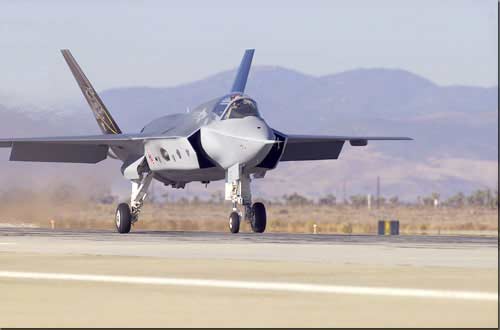
(What we're arguing about: An F-35C launched by EMALS at NAS Lakehurst, NJ - Look Mum, no Steam!)

It seems that the UK MoD's trials and tribulations with the 2012 Planning Round (PR12) which have been referred to here before, are now so serious that it can't be announced before the Easter recess. In other words, the MoD is tacitly accepting that it won't be able to start the 2012-13 financial year with a plan that is costed and deliverable.

Well done.

To the cynics out there who could point out that this is hardly anything new, you have a point. Indeed, it is so consistent with previous MoD fiascos that one could be forgiven for thinking that Liam Fox - he of the "broadly in balance" budget fiasco was still in charge.

Fortunately he isn't. But "Spreadsheet Phil" Hammond needs to get the budget balanced without undermining the UK's semblance of a strategy. And for as long as this involves the carrier programme, the correct answer is F-35C, EMALS and traps - a cheaper, less complex aircraft that takes twice the bombload half as far again, or half again as many bombs twice the range of the F-35B jumpjet.

If we're serious about Carrier Enabled Power Projection (CEPP), then the F-35C is the correct way forward. Find the money and move on.

(And if you're having difficulty with the money, you could always cancel Trident.)

Saturday, March 10, 2012

CentreForum Trident Report

(Shameless self promotion, I know... deal with it!)

Forgive my lack of posting - I've been totally consumed by getting CentreForum Trident paper finished. And now it is - you can get it here - and there's been lots of interesting media coverage. I'm deeply indebted to many people - the acknowledgements are there for a reason - but the one I most liked was from the UK communist Morning Star; only the comrades know the truth. (NB Irony Alert!) We also made the wonderful ArmsControlWonk - with thanks to Dr. Jeffrey Lewis.

Normal service will be shortly be resumed...

Wednesday, January 4, 2012

As ever, read the instruction manual....

When they built this:

(HMS Resolution, the UK's first SSBN arriving at Faslane in 1967 for the first time)

The good people involved wrote a book "The Nassau Connection" explaining how they did it - or at least how they managed the project.

(A short book. Sadly out of print.)

It's a short book, at just over 100 pages in a sparse civil service style, and is very interesting. So if you want to build something to replace this:

(HMS Vanguard, the first of Trident submarines arrives in 1994)

You'd do well to read this most interesting little book. Equally, if you think this is a silly idea (or even a very silly idea) then there's plenty of food for thought in this book, too. I'll post a fuller review shortly.

Friday, December 30, 2011

Umm, not the 1st of April yet...

 
(We are here. Infidels are here, here and here. Apostates over there. Good. Points? Questions?)

Those kray-zee Iranians.

Just when Christmas television looked like getting everyone down, up popped the comedy act that is North Korea* to entertain us with their choreographed grief (though believe me, if I were living in Pyongyang, I'd have cried and wailed with the best of them just in case someone decided that I had been insufficiently upset and felt that a little reeducation was in order.)

Not to be outdone by their former colleagues in the Axis-of-Evil, Iranian Admiral Habibollah Sayyari says it would be "very easy" for his navy to shut down the Strait of Hormuz (SoH) if the nasty west (and especially the nasty EU led by the confounded British, whose hand is behind everything bad in the Islamic Republic, I'm reliably informed) has the temerity to impose oil sanctions on Iran for its repeated violations of the NPT, which the IAEA noted in their 18 Nov 11 Resolution. And here's a nice piece from the good people at APM's Marketplace - they do a great daily podcast, too.

Excellent, certainly a move that's all about the spirit of the season, and likely to bring everyone together and allow us all to get along better and all of that. 

But is it feasible?

(Ah. Rather narrow then.)

The strait is about 34nm across at it's narrowest point, and more importantly, the commercial traffic goes through the two 2nm corridors marked on this helpful map. And given the major Iranian naval base at Bandar Abbas is nice and close, in principle Iran's two naval arms - IRIN and the IRGC(N) - could make a stab at "closing" the SoH if they so chose. However, this overlooks a couple of things.

First, legality. Such a blockade would be illegal (states have the right to peacefully sail through straits worldwide) - something established in customary international law and in the 1948 ICJ Judgement in the Corfu Channel case - unless it was an act of war. An Iranian declaration of war against the rest of the world seems somewhat unlikely, and so in the absence of a UNSCR allowing for Iran to close the SoH (inconceivable), then the Iranians would be acting illegally.

Second, actual capability. Does Iran really want to take on the US Navy and her allies in a shooting match in the SoH whether on the water or from shore based missile and artillery batteries (or both?)? I can't see it - the Iranians could get lucky and cause some damage to naval vessels escorting oil tankers or patrolling the Straits - but the risk of retaliation sinking the rest of your fleet (or worse, starting a broader war) is such that you'd have to be nuts to try it. And this blog (at least) doesn't think that the Iranian regime irrational - more than anything else, it is solidly focused on it's own survival.

So, nothing to see here - let's all get back to the Christmas specials on telly. But not a clever move by the Iranians, and I suspect, not one that they're going to enact, irrespective of their domestic posturing.

Finally, in the spirit of goodwill to all men, in the unlikely event that this does kick off, please don't ask the Royal Navy how many spare ships it has to send out to help out in the SoH. You may get an answer similar to asking the RAF how many maritime patrol aircraft they can quickly send. Seen from here, the choices made in SDSR 2010 are looking less clever by the month.

*As long as you don't live in it or near it, clearly.

Saturday, November 26, 2011

Strategic Thinking on Trident Part II

 
(The Muppets' take on SDSR. As opposed to the take of the muppets who actually did SDSR.)

I was reflecting on Trident with a friend the other day, and unusually, we agreed on something: that the key questions are all about prioritization and the UK's role in the world, with the international legal questions playing a constructive but not definitive role. Indeed, dear reader(s)*, I (sadly) accept that the UK will attempt to finesse any argument on NPT Art VI based on whatever the Government decides it wants to do - though I broadly accept Daniel Joyner's argument on Art VI, and specifically Christine Chinkin's 2005 Opinion on the UK's obligations under the NPT, and that replacing Trident would be inconsistent with the UK's NPT obligations.**

The question my friend and I sparred over was whether there was a case for Trident replacement based on the uncertainty of the world situation, and the possibility / probability of further proliferation of nuclear arms; specifically, should Iran go nuclear, would this prompt Saudi acquisition of nuclear capability as Sir Malcolm Rifkind MP suggests, leading to the nuclearisation of the rest of the Middle East? 

(DF-21C. Presumably Saudi ones at least get a different paint scheme.)

I am the first to agree that there is little to be gained in terms of regional security by the proliferation of atomic weapons to Iran and Saudi Arabia. Indeed, as the Atlantic Magazine points out this week, the insecurity of Pakistan's atomic arsenal is perceived as one of the three most serious national security threats to the US; the notion of Saudi buying an atomic capability from Pakistan (or more implausibly, Israel) to mount on its recently acquired Chinese Dong-Feng 21 (CSS-5) MRBMs is plausible and worrying. But the should the expectation that Iranian nuclearisation and Saudi response mean that the UK should go ahead and replace Trident? 

In a word, "No".

Why?

The rationale for an independent UK nuclear capability has historically been based around the perceived need for a second-decision making pole in a superpower exchange: bluntly, would - when push came to shove - the US initiate a tactical / strategic nuclear exchange which would result in the destruction of the American homeland to respond to a conventional Warsaw Pact invasion of Western Europe? In case the answer was "no" - or "possibly no" - then the case for a British (and French) nuclear force that could inflict enough damage on the USSR to deter the Soviet Union from trying it on - the fabled "Moscow Criterion" - was intellectually defensible. 

However, it was only required because the US could have been subject to nuclear blackmail - something that none countries of concern (Iran, Pakistan, North Korea) have demonstrated. And it is instructive to see how far from this position these countries are: the closest would be North Korea if it were able to deploy a reliable Taepo-Dong 2 ICBM force with which it could hit the US west coast - which is about a million miles from the current position of two public test flights that ended in failure, and no evidence that the required small (under 500kg) nuclear warhead exists in North Korea. If Pakistan can produce the Tamiur ICBM (yet to be tested, much less deployed), the reported 7000km design range does not bring the US within range - see below:

(OPAB is the ICAO code for Abbotabad - Osama bin Laden's last home town.
7000km is the lighter area - excluding all of the USA.)

As such, Tamiur poses no threat to the US and therefore there would be no cost to the US in responding to (the currently - and for the foreseeable future - technically impossible) proposition of a Pakistani nuclear ICBM attack on the UK. Consequently, the fear of nuclear blackmail leading to strategic decoupling of US from NATO from a Tamiur-style ICBM is simply non-existent. (It is accepted that Pakistan could put an atomic weapon in a shipping container and deliver to target on a truck - but unless you're prepared to retaliate on suspicion of the source, Trident is no use to you.)

It is also hard to see that the US/NATO gains much from UK Continuous At-Sea Deterrence (CASD) given the very limited number of warheads that UK Trident now carries. Indeed, the gang over at Arms Control Wonk argue persuasively that even if the US defence cuts from the failure of the Budgetary Super Committee disproportionately fell on the nuclear forces -  leading to the removal of a land-based ICBM and cutting SSBN(X) Trident submarine replacement to 10 boats from 12 - then the US could still configure its forces to max-out the New START limits. With 1550 warheads, it's hard to see what difference 48 UK CASD warheads makes to the decision-making of, say, North Korea or Pakistan now or in the next 20 years.

It is on this basis that I'm coming to the position that the UK gains very little in security terms from retaining Trident; it does however cost at least £30bn that could make a significance difference to the UK's conventional forces, which, as we've discussed ad nauseam here is actually what could make a significant difference to the UK - and to NATO and the UK's non-NATO partners. Moreover, until the UK brings the new aircraft carriers into service - preferably with some aircraft to fly off them - UK conventional long-range short-notice conventional force projection is limited to two cruise missile systems: the RN's with BGM-109 Tomahawk from its attack submarines (SSNs) and RAF Tornados with Storm Shadow. Both systems are excellent and provide complementary capabilities. Indeed, HMS ASTUTE recently completed the first of class firings of Tomahawk in the USA.

As good as these systems are, there are clear limitations - Storm Shadow is comparatively short-ranged (reportedly under 300nm) meaning that some credible target sets will require the Tornados to overfly defended territory with attendant greater risks, and will in any event likely require local basing rights for the Tornado launch aircraft. Tomahawk is long range (more than 1000nm) but the RN is suffering from an acute lack of SSNs with the older Swiftsure-class boats now retired, and the first of the Trafalgar-class also struck without the replacement Astute-class SSNs ready to replace them. Moreover, the Trafalgar-class's maximum warload of 30 torpedoes and Tomahawks means that the total number of missiles is actually available against any target set is likely to be less than this. And though stealthy, a submarine can only be in one place at once.

(USS Ohio undergoing SSBN to SSGN conversion)

Decomissioning Trident could address both of these problems. As part of the 1992 START II Treaty, the US Navy would have to reduce its total SSBN fleet to 14. However, instead of scrapping them, it converted four of its 18 Ohio-class SSBNs to carry up to 154 Tomahawks instead of Trident missiles. The result is an impressively balanced, stealthy, strike platform, which provides far more relevant capability to today's - and tomorrow's - conflicts than the Trident missiles formerly carried. Better still for the UK, given that the UK's Vanguard-class SSBNs have the same missile compartment design - though mounting 16 rather than 24 tubes - conversion to Tomahawk carriage should benefit from the considerable work already completed by the US Navy. A full-up Vanguard-class SSGN could carry 106 Tomahawks - more than three times the theoretical maximum number on a Trafalgar-class.

SSGN conversion and already anticipated life-extension to the Vanguard-class would allow the UK to have a deployable, long-range conventional precision strike platform through to the full operational capability of the Queen Elizabeth-class aircraft carriers in the mid-2020s. Food for thought!

* As per ES, it is essential to provide grammatical certainty
** This raises the interesting question of what would happen if the Finance Act which provided funding for Trident were the subject of a Judicial Review....

Monday, November 21, 2011

Strategic Thinking on Trident Part I - Why?

 
(RNAD Coulport - where the UK's nuclear weapons are stored before being mated to Trident missiles)

What should the UK's future policy be on replacing of Trident? And how should the IAEA's November 2011 report on Iran affect the UK's position?

These aren't easy questions, going as they do to the core of what the UK's role in the world is / should be over the next 30 years, and what the British people are prepared to pay for this role. Indeed, if the last 30 years are any guide to the next 30, then UK politicians will find it far too easy to ignore the cost of their global ambitions, and in effect hoping that their unfunded strategic bluff will never get called.

Indeed, this was British policy in the 1920s under the so-called "10-year Rule", which postulated in Professor Vernon Bogdanor's words, "that they should plan on the assumption there would not be a war for the next 10 years because the view was that large armaments led to war - this was only abandoned in 1932." Helpfully, the 10-year rule was also much cheaper than rearmament. And arguably, (Afghanistan aside), the UK's 2010 Strategic Defence and Security Review (SDSR) has in effect attempted to reinstitute the 10-year rule with a strong focus on what it calls "Future Force 2020", in which painful cuts today will, in the words of the RAF PR machine lead to:

"The longer-term vision for the make up of our military – Future Force 2020 – will be secured by this one-per-cent-a-year real terms increase in the planned equipment and equipment support programme."

Except that there is little confidence that the money required is available, given that at the beginning of the SDSR process there was at least a £42bn hole in MoD's procurement finances in the period to 2020. Helpfully, much of the capital spending on the Trident spending would occur just beyond this horizon, and is thus helpfully excluded. Hence, a more realistic assessment of the position is that it is even more unhealthy than this looks.

The time for such a muddled "strategy" - if it ever existed - is well and truly over. Instead, what is required is a careful assessment of the what role the UK wants to play internationally, and how it should go about getting there from here - accepting that "here" is not an optimal starting point. Moreover, given that it will cost at least £25 - £30bn in capital spend between now and 2025, the replacement for Trident has a central role to play in any such discussion - something that Dr. Liam Fox MP as the Secretary of State for Defence at the time of SDSR explicitly overruled by insisting that Trident would be replaced (and implicitly, whatever other cuts were required would be borne to protect the Trident programme.) As we've seen, the required cuts were deep, wide-ranging and rushed: it is therefore of little surprise that in the next decade Britain's conventional forces will become dangerously unbalanced (e.g., an RN capable of deployed a carrier battle group sans aircraft, but only if they stopped doing almost anything else; no fixed-wing maritime patrol assets to support maritime ops; 14 extremely expensive PFI air-refuelling tankers and down to 8 squadrons of fast jets. And this is before we get to the Army...).

So what? And more importantly, so what about Trident?

Well, it's difficult. We'll come to that in Part II. But here's a teaser....

(USS Ohio SSBN-726 undergoing SSGN conversion. 
Note the former Trident tubes open behind the sail)

Wednesday, November 9, 2011

NPT Article VI

(IAEA, guardian and enforcer of the much sinned-against NPT)

Well, the good news is that the trial is over, and normal service is being resumed; the present status flag will move from Vermont, but I expect that it will be back reasonably soon.

As I mentioned a week or so ago, some new work is being kicked off on the British replacement of Trident, with an initial focus on the legal issues surrounding the strange case of the extra comma. Let's pick up the analysis of the Nuclear Non-Proliferation Treaty (NPT) Article VI from where we left off - looking at Daniel Joyner's new book "Interpreting the Nuclear Non-Proliferation Treaty". Joyner's book came in for some reasonably trenchant criticism, which in my view makes it all the more interesting.

It is.

Joyner's argument is beguilingly based on the Vienna Convention on the Law of Treaties (VCLT) - the Treaty that governs how to interpret Treaties. His (altogether unremarkable) conclusion is that a straight reading of the NPT and it's negotiating history is that as a document it takes the form of three pillars - non-proliferation (Articles I, II and III), peaceful use of nuclear energy (Articles IV and V) and disarmament (Article VI). So far, so conventional. What is more radical is the proposition that the NPT was balanced between these pillars, and that Article VI is just as important as Articles I-III. Joyner's most radical work is in his interpretation of what Article VI actually means (it's that pesky comma again).


But that comes later. Joyner's starting point is the nature of the NPT itself - a contractual rather than merely law-making  treaty. In this, Joyner comes to the conclusion that it is the contractual nature of the NPT that provides a key insight into its interpretation; that in making the treaty contractual on a range of differing obligations, it becomes clearer that the Nuclear Weapons States (NWS) owe disarmament obligations to the Non-Nuclear Weapons States (NNWS) in return for the NNWS not pursing their own nuclear weapons programmes (and in the process, locking in their strategic disadvantage / inferiority).

Article VI
Each of the Parties to the Treaty undertakes to pursue negotiations in good faith on effective measures relating to cessation of the nuclear arms race at an early date and to nuclear disarmament, and on a Treaty on general and complete disarmament under strict and effective international control.

Joyner goes on to make a strong case that Art VI commitments are not, pace the Bush Administration's Christopher Ford, merely a commitment to pursue negotiations on nuclear disarmament, but that the good faith test pushes things on to a requirement to conclude a nuclear disarmament treaty separately to the general and complete disarmament treaty that is also envisaged in the NPT.

This view also takes the state practice of the NWS should - it would appear on the basis of self-interest - to be weighed against that of the NNWS, and largely discounted because of the self-interest inherent in their position. I don't think that it's possible to go this far. An with respect, I don't see how the the ICJ's Advisory Opinion in the 1996 Nuclear Weapons Case from paragraph 99 onwards can conclude that

"... the legal import of that obligation goes beyond that of a mere obligation of conduct ; the obligation involved here is an obligation to achieve a precise result - nuclear disarmament in all its aspects - by adopting a particular course of conduct, namely, the pursuit of negotiations on the matter in good faith."
Inasmuch as if this was the construction that the drafters had intended, then they could simply have drafted Art VI thus:

Article VI
Each of the Parties to the Treaty agrees to nuclear disarmament, and on a Treaty on general and complete disarmament under strict and effective international control.

The point is that they didn't. Much better, I think is the 2005 Joint Opinion by Professor Christine Chinkin at LSE and Rabinder Singh QC, formerly of Matrix Chambers, who note in paragraph 69 that 

69. The Treaty obligation is thus not to disarm as such, but a positive obligation to pursue in good faith negotiations towards these ends, and to bring them to a conclusion. Good faith is the legal requirement for the process of carrying out of an existing obligation.... 

leading them to conclude in paragraph 74: 

74. Enhancing nuclear weapons systems, possibly without going through parliamentary processes, is, in our view, not conducive to entering into negotiations for disarmament as required by the NPT, article VI and evinces no intention to 'bring to a conclusion negotiations leading to nuclear disarmament in all its aspects'. It is difficult to see how unilateral (or bilateral) action that pre-empts any possibility of an outcome of disarmament can be defined as pursuing negotiations in good faith and to bring them to a conclusion and is, in our view, thereby in violation of the NPT, article VI obligation. 

This instinctively feels like the best balance of the difficult negotiating process and subsequent history of the NPT. And it would make a UK Trident replacement a violation of the NPT, and with it a violation of international law.

Interesting times!

Saturday, October 22, 2011

The strange case of the extra comma

 
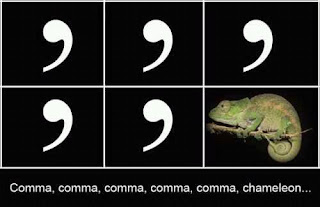
(Commas are important. And box two contains a chameleon; do keep up at the back.)

Grammar? Oh dear.

At the risk of dredging up bad memories for an entire generation, (myself included), I'm sorry to confirm that our 4th-grade teachers were correct: grammar matters. And it is especially important to lawyers when it comes to interpreting legislation and Treaties. For international law, the sacred text in interpreting treaties is itself a Treaty - the 1969 Vienna Convention on the Law of Treaties (VCLT) which came into force in 1980.

The grammatical challenge du jour is with the 1968 Nuclear Non-Proliferation Treaty (NPT). NPT Article VI reads:

"Each of the Parties to the Treaty undertakes to pursue negotiations in good faith on effective measures relating to cessation of the nuclear arms race at an early date and to nuclear disarmament, and on a treaty on general and complete disarmament under strict and effective international control."

This is a very long sentence. With a single comma.

It could be interpreted in a couple of ways:

First, it could mean that State Parties are are obliged to pursue good faith negotiations on ceasing the nuclear arms race, and nuclear disarmament as well as pursing a treaty on general disarmament under strict and effective international controls.

Second, it could mean that the State Parties are obliged to pursue good faith negotiations on ceasing the nuclear arms race, and nuclear disarmament within the context of a treaty on general disarmament under strict and effective international controls;

Grammatically, the first interpretation makes more sense than the second, because the comma separates the first clause

"negotiations in good faith on effective measures relating to cessation of the nuclear arms race at an early date and to nuclear disarmament,"

from the second

"and on a treaty on general and complete disarmament under strict and effective international control"

making it clear that the two are separate notions.

This construction would mean that the Nuclear Weapons States (NWS) were obliged to disarm independent of a treaty on general disarmament. Under this understanding, it would hard to argue that spending £30bn - £100bn between now and 2042 on a replacement for Trident would qualify as "nuclear disarmament", and that as such, such a purchase would be in direct contravention to the UK's international obligations, and would therefore be illegal as a matter of British law.

Unsurprisingly, perhaps, the UK Government favours the second interpretation, tying as it does nuclear disarmament to a future treaty on "general and complete disarmament". As this happy state of affairs is yet to occur (CCW, CWC and BWC notwithstanding) - and the use of the modifier "complete" sets the bar extremely high - so the logic goes, there is no requirement for nuclear disarmament, however desirable this may be. Conveniently, the second formulation does not make it illegal to procure a replacement to the existing UK Trident SLBM system.

(Minimum deterrence looks a lot like maximum deterrence but with fewer missiles.)

But what's interesting is that over the last decade or so, UK Governments have clung to their tortuous grammatical interpretation whilst publicly demonstrating that the UK is making reductions in its nuclear forces (even as they spend £1bn per annum to reinvigorate the AWE Aldermaston nuclear weapons design and production infrastructure). This appears to be an odd halfway house, as it attempts to demonstrate that the UK is moving towards nuclear disarmament whilst retaining what Whitehall describes as a "minimum credible deterrent".* Moreover, to scrub up its disarmament credentials, the UK draws attention to its ratification of the Comprehensive Test Ban Treaty (CTBT), and the fact that irrespective of the stalled Fissile Material Cut-Off Treaty (FMCT), the UK is no longer producing fissile material for military purposes.** 
Indeed, the UK Foreign Office goes so far as to describe the impact of the 2010 Strategic Defence and Security Review (SDSR) thus:

"In this Review the Prime Minister, David Cameron, and Deputy Prime Minister, Nick Clegg, committed the UK to maintaining a credible deterrence by:
  • reducing the number of warheads onboard each submarine from 48 to 40
  • reducing our requirement for operationally available warheads from fewer than 160 to no more than 120 
  • reducing our overall nuclear weapon stockpile to no more than 180 
  •  reducing the number of operational missiles on each submarine
These reductions illustrate that whilst the UK believes in maintaining a minimum credible deterrent this is kept constantly under review and is fully in line with our international obligations under the Nuclear Non-Proliferation Treaty."

But it is only in line with the UK's "international obligations under the Nuclear Non-Proliferation Treaty" if the second, grammatically tortuous, interpretation of NPT Art VI is accepted. 


So who is right? And does it matter?

On which interpretation is correct, I'm not sure yet. But it certainly matters, as if the first interpretation is correct, then the UK Government could find themselves explaining a breach of their international obligations. Against this backdrop, I'm very much looking forward to reading Daniel Joyner's new book, especially after some of the critical reviews. I'll write again when I've read it and reflected.

* As mentioned before this blog does not accept the bald assertion that the UK Trident system currently deters anyone or anything, and therefore doesn't use the term.

** The cynics may observe that it's easy to be in favour of a narrow FMCT if you've got all the highly enriched nuclear fuel that you would ever need on hand, especially if it is already outside of IAEA safeguards.

Friday, October 21, 2011

New Project: Trident Replacement

(One of the few photos to make Type 45 DDGs - left - at £1bn each look comparatively inexpensive...)

As some of you know, I'm currently sitting on as a juror, meaning that these posts are somewhat erratic. For this, my apologies - we should be done next week. 

However, this is the first post in a new series on the options and legal issues occasioned by the UK's impending decision on whether or not to replace the Vanguard-class ballistic missile submarines (SSBN) in June 2015 as part of renewing the UK's nuclear weapons programme. A future UK SSBN would carry the UGM-133 Trident II D5 submarine-launched ballistic missile (SLBM), which has been life-extended to their expected out-of-service date of 2042. In short, the (so-called) "UK Nuclear Deterrent"* could easily be assumed to be required and simply treated as a technical and management challenge that just requires the MoD and the defence industry to get on and build the submarines.

As a system, Trident remains impressively reliable, with USS NEVADA conducting the 135th consecutive successful test launch in March 2011, an unmatched reliability record for SLBMs, and one which contrasts vividly with the Russian's on-going problems with the SS-NX-30. Moreover, as a result of the 1962 Polaris Sales Agreement as amended for Trident under Regan and Thatcher in 1982, the UK has a privileged position vis-a-vis the other nuclear states, it does not have to develop an indigenous SLBM delivery system, making UK Trident comparatively cost effective.   

(Not your average SLBM showroom)

Trident is, in the famous words of Sir Humphrey Appleby "the nuclear missile that Harrods would sell you". Perhaps, but as (the ever) hapless Jim Hacker replies, "... it costs £15bn and we don't need it." Allowing for inflation from 1986, this is roughly the discussion that the UK faces today. 

But as much as I revere "Yes, Prime Minister", there are also financial, strategic and legal elements at play in the decision, and this blog will present commentary of them over the next few months. 

*You will never see this blog refer to the UK nuclear weapons programme (UK NWP) as the "UK Nuclear Deterrent" as this implies a value-judgement that has yet to be demonstrated, namely, that someone or something would, but for the existence of the "Deterrent" want to attack the UK, and have therefore been successfully deterred.

Sunday, October 9, 2011

Post SDSR - Implementation through PR11

 
(Hunter PR 11*. Like MoD PR 11 but much more elegant...) 

Planning Round 11 - PR11 
I accept that it's boring bureaucracy, but process is vital in Government, and never more so than when dealing with budgets and finance. What's critical to remember is that the settlement reached in a Comprehensive Spending Review (CSR) / Strategic Defence and Security Review (SDSR) is in a very meaningful sense Churchill's "End of the Beginning", rather that an end in itself: all that has been agreed at this point is the budget "envelope" within which the Department will have to operate for the length of the budget deal.

What then happens is the process of converting the CSR / SDSR settlement into something that actually can (at least theoretically) be implemented by the MoD. This is a critical, and often under-rated / misunderstood step - many a drip slip betwixt cup and lip and all of that. It is also where the painful decisions become crystallised - where the metaphorical rubber really does hit the road.

In the MoD a key part of this process is known by the catchy title of "Planning Round XX". This process costs lots of options, prioritises them, chooses which elements to fund and which cuts to make to make the proverbial quart fit into a pint pot, and ultimately spits out an answer that is the operational annual budget of the MoD; the work for next year is PR 11.

What was done?
The first pass results were announced by Liam Fox on 18 July 2011. As Chalmers points out, this is effectively another Defence Review less than a year after the SDSR was completed, underlining that the SDSR did not resolve the funding dilemma - and was therefore unimplementable. It is hard to imagine a more damning indictment of a review of SDSR's scale and ambition.

Some good news came in July - there was a planning commitment that the MoD equipment procurement and equipment support budgets would increase 1% in real terms from 2014/15. Of course, this is an attempt to bind a future spending review - and indeed a future Parliament in a way that A. V. Dicey et al would decry as unconstitutional interference with Parliamentary Sovereignty - which may or may not work; not the least reason is that if the economy doesn't turn around the pressure on the post-Afghanistan MoD budget will all be one direction.

In return for jam tomorrow, MoD has agreed to make what Chalmers calls "further difficult decisions on capability reductions, notably in Army personnel numbers." Specifically, this means bringing the Army down to 84,000 by 2020, a figure that was bandied about in the SDSR process. But the problem is that what these reductions are to be hasn't been announced, which implies that it hasn't - or at least the phasing and the force mix - hasn't been agreed. The answer to maintaining capability by cutting numbers is to shift to (cheaper) reservists from (expensive) regulars, with £1.5bn over the next decade to fund this. What impact £150m p.a. will have is not yet clear.

UK Future Capabilities Pit Falls Overspends

 (Type 26 Global Cocktail Party Platform Combat Ship)

 (F-35C Lightning II - shiney, American, over-budget, late)

 (RN Trident II-D5 SLBM Launch. No, you don't get to see the "cool" submarine thing.)

The most obvious risks in a strategic steady state - ie, without any new unplanned for threats or wars -  are the three biggest ticket items - replacement submarines for Trident, F-35 Lightning II strike fighters for the FAA and the RAF, and the future frigate, Type 26.

Trident is perhaps the easiest to discuss because it is so binary as a programme - it is largely independent of the rest of the MoD force structure in that though it has supporting assets, at a pretty profound level you either do Trident or you don't. And therefore you can consider the £30 - £100bn bill with a degree of isolation from the rest of the budget. It is also a significant technical risk given that it is a new UK submarine design, as with the unfortunately named "Astute" class, this is an area of significant weakness in the UK defence manufacturing base.

 (All of this for 20 sorties a day? Really? Really?!)

F-35C is connected to other programmes, most obviously the carrier. It is also different in that the UK is a bit part player in the US programme, and the US will make F-35 work for the USAF and the USN, because without it, their qualitative edge over "near peer" adversaries will erode. The cost, however, is vast, and initial (optimistic) UK procurement figures of 132-150 F-35s simply will not happen as the unit cost seems destined to be around the £100m mark. At that price, 60 airframes - or enough for just four 12 aircraft squadrons plus a training flight - is a £6bn+ programme - similar to the aircraft carriers.

It is easy to see why Chalmers cites an MoD decision to routinely deploy the UK carrier with only 12 aircraft (versus the 36 originally intended). Unfortunately, 12 aircraft the work of 36 cannot do, and the MoD has scaled back the sortie-generation requirement of the carriers from 72/day to 20. 20?! Given that the cost spiral and delayed service entry date for the F-35C was known and knowable in 2010, it is hard to understand how the carrier programme could have made prioritisation sense if it is only expected to produce 20 sorties per day. Charitably, all that can be assumed is that the planners were planning on having more than four squadrons of F-35C in total, making it more likely that the FAA could have 36 aircraft and crews trained and deployable. Except that if there are only four 12 aircraft squadrons in toto, this is not going to happen. From this, it is hard to understand why the UK is pursuing the carrier programme at all.

 
(Type 45: Stalin's maxim that "Quantity has a Quality all its own" doesn't work in reverse...)

Type 26 is much easier to argue for and against. The UK needs a new frigate. It is not clear that the UK needs to go to the trouble of developing one for what will never (sadly) be more than 20 hulls, and may well end up being half of that. Given that the Canadians are not interested in a collaborative programme, the Brazilians may buy one and then build their own, and there is lots of competition, it would surely make more sense for the UK to buy off the shelf from Europe (FREMM, Lafayette or F124 would do nicely). And before anyone shouts "HORIZON was a disaster", if we had proceeded with it, the RN should have been able to afford 9 or 10 instead of the 6 Type 45s they're going to operate at £1bn each.

Tough choices. But they need to be made if the UK is going to get maximum value for money from the small defence budget: MoD is not there to create or sustain jobs for BAES. 

So, with the greatest respect to Malcolm Chalmers, it is hard to see how he can conclude that, "the MoD now appears to be well on the way to closing its £74 billion funding gap" until the cuts are detailed and the numbers and the underlying assumptions can be independently verified (as the NAO is now empowered to do.) Let's see how they get on, but I'm a long way from convinced.
* Ok pedants, I know the RN used the Hunter PR 11s as trainers and not operationally, and that therefore they should probably been designated T(PR) Mk. 11 - or indeed T(PR) Mk. 12 as they were based on Hunter F Mk. 4 airframes, not the FGA Mk. 9 that begot the RN's GA Mk. 11. If this is a burning concern, I suggest you complain retrospectively to the Chief of Staff (Aviation and Carriers) and Rear Admiral Fleet Air Arm, as he's presumably less busy than he was, given the scrapping of the Harriers and the Carriers...