(Ainsworth addresses the Commons
in December 2009 on defence cuts. He might have said
"I've done some sums, and they don't add up. But don't worry, I'm not
going to be here after the election to worry about that.")
Apologies
for the lack of postings from here at SRM HQ - I've been very busy and,
as they say, all will be revealed shortly. Thus, it is with apologies
that this follow up to part one has been delayed - but here we are now.
The
figures are stark: the UK MoD is broke, and despite the cuts from the
2010 Strategic Defence and Security Review (SDSR) that we've discussed here and here
before, there are reasonable grounds to assume that there are more cuts
to come. Indeed, whilst Liam Fox told Parliament on 18 July 2011 that
the defence budget was "broadly in balance", it must be assumed that "broadly in balance" actually means "not actually in balance, so more cuts are required".
But this is not news. Indeed, prior to the 2010 election, Labour belated recognized that they'd blown the budget. This was made powerfully clear in Bernard Gray's report, which famously described the budget as undeliverable under any likely future budget. This was demonstrated in his chart on p. 94:
(Not ever going to work)
Moreover, Shadow Chancellor Ed Balls has made clear that Labour will accept the Coalition's cuts, meaning that Jim Murphy and his team need to meet the same challenge as the Government - find £74bn over ten years to balance the defence budget. And that will mean a proper discussion of what the UK is going to do with it's place in the world, setting the Government's aspirations, and then providing the budget to cover them.
(RNAD Coulport - where the UK's nuclear weapons are stored before being mated to Trident missiles)
What should the UK's future policy be on replacing of Trident? And how should the IAEA's November 2011 report on Iran affect the UK's position?
These aren't easy questions, going as they do to the core of what the UK's role in the world is / should be over the next 30 years, and what the British people are prepared to pay for this role. Indeed, if the last 30 years are any guide to the next 30, then UK politicians will find it far too easy to ignore the cost of their global ambitions, and in effect hoping that their unfunded strategic bluff will never get called.
Indeed, this was British policy in the 1920s under the so-called "10-year Rule", which postulated
in Professor Vernon Bogdanor'swords, "that they should plan on the assumption there would not be a war for the
next 10 years because the view was that large armaments led to war -
this was only abandoned in 1932." Helpfully, the 10-year rule was also much cheaper than rearmament. And arguably, (Afghanistan aside), the UK's 2010 Strategic Defence and Security Review (SDSR) has in effect attempted to reinstitute the 10-year rule with a strong focus on what it calls "Future Force 2020", in which painful cuts today will, in the words of the RAF PR machine lead to:
"The longer-term vision for the make up of our military – Future Force
2020 – will be secured by this one-per-cent-a-year real terms increase
in the planned equipment and equipment support programme."
Except that there is little confidence that the money required is available, given that at the beginning of the SDSR process there was at least a £42bn hole in MoD's procurement finances in the period to 2020. Helpfully, much of the capital spending on the Trident spending would occur just beyond this horizon, and is thus helpfully excluded. Hence, a more realistic assessment of the position is that it is even more unhealthy than this looks.
The time for such a muddled "strategy" - if it ever existed - is well and truly over. Instead, what is required is a careful assessment of the what role the UK wants to play internationally, and how it should go about getting there from here - accepting that "here" is not an optimal starting point. Moreover, given that it will cost at least £25 - £30bn in capital spend between now and 2025, the replacement for Trident has a central role to play in any such discussion - something that Dr. Liam Fox MP as the Secretary of State for Defence at the time of SDSR explicitly overruled by insisting that Trident would be replaced (and implicitly, whatever other cuts were required would be borne to protect the Trident programme.) As we've seen, the required cuts were deep, wide-ranging and rushed: it is therefore of little surprise that in the next decade Britain's conventional forces will become dangerously unbalanced (e.g., an RN capable of deployed a carrier battle group sans aircraft, but only if they stopped doing almost anything else; no fixed-wing maritime patrol assets to support maritime ops; 14 extremely expensive PFI air-refuelling tankers and down to 8 squadrons of fast jets. And this is before we get to the Army...).
So what? And more importantly, so what about Trident?
Well, it's difficult. We'll come to that in Part II. But here's a teaser....
(USS Ohio SSBN-726 undergoing SSGN conversion.
Note the former Trident tubes open behind the sail)
(Ministry of Deficits? Not quite an anagram, but there you are...)
Prof. Malcolm Chalmers of the Royal United Services Institute (RUSI, MoD's favourite thinktank) published a new paper this week on UK Defence spending, and it makes interesting reading. In this post, we'll look at what was said about the numbers and the Strategic Defence and Security Review (SDSR); in the next one, we'll look at implementation through Planning Round 2011 (PR11).
Labour's Legacy
The first (and most important) point is that the the out-going Brown Administration left the MoD in a terrible positon. Depending on how you ask the question, the scale of the 10-year budget shortfall between 2010-11 and 2020-21 was either £27bn (a difficult £2.7bn p.a. - or roughly 8% of the MoD's baseline budget) if you allowed for 1.1% real growth, or a terrifying £51bn (an impossible £5.1bn p.a. or more than 14% of the annual budget) if the budget had been maintained at 2010-11 in real terms. And these were estimates which assumed that this programmes in the budget would (for the first time) run on time and to budget. (Ah. Ish?)
(Bob Ainsworth MP, Labour's last Defence Secretary - "ineffective" might be the politest word.)
In fact, despite Labour's recent attacks on the Government over the cuts, for Labour to close this funding gap, spending would have had to increase at at least 2.2% per annum for the next decade. Ignoring austerity and the fiscal realities that go with this, this is a level of increase unknown since 1985, and more than twice the 1.1% growth that they actually invested over the course of their 13 years in power. As Chalmers notes,
"... as a result, the MoD found it increasingly difficult to fit an ambitious forward programme within a much less ambitious – albeit still slowly growing – budget."
Indeed. Worse, Labour in general and Bob Ainsworth in particular made a number of pledges to purchase equipment late in the Brown Administration that sounded good - e.g. another 22 Chinook helicopters - when they must have known that there was no money to pay for them. This was either breathtakingly cynical politics of the worst kind, (with the results measured in the dead and maimed), or it demonstrated a criminally complete lack of knowledge, competence, control and responsibility. Either should have been a resigning - or sacking - matter.
So not only should Labour apologise for their past record, they should also probably shut up about the whole thing for a decent period, until they've actually got a grip on the big questions (e.g. UK's role in the world, Trident, funding this defence business).
May 2010 - A new dawn. (Or at least a Defence Review)
(We're on the same side. Honest.)
SDSR was the long overdue defence review that built on the hodgepodge of the period since the 1998 Strategic Defence Review (SDR 98) and 2002's New Chapter. And the £51bn hole in the budget over the next decade needed to be addressed at a time of an unprecedented fiscal squeeze. Enter Liam Fox, stage right.
But austerity isn't fun, as the current Government is finding out. Liam Fox successfully fought for a smaller cut than the Treasury wanted, but was only partially successful. Defence did do comparatively well - it had an 8.5% real terms cut by 2014-15 rather than the 10-15% that most external observers were expecting; at some level this is a comparative triumph. However, this was on top of the £51bn that MoD was already in hole over the next decde, and led to two problems.
First, due to the 8.5% cut that the MoD received in the austerity budget of the 2010 Comprehensive Spending Review, the 10-year deficit increased to an eye-watering £74bn.
Second, the Treasury (very sensibly, in my view) got the funding of Trident replacement back into the defence budget, rather than being a freebie provided by the Treasury. This added between £25bn and £50bn to the Departmental deficit through to 2030 - and as the majority of these costs come after 2020-21, they are not included in the £74bn figure. It can be inferred that HMT was trying to achieve two things - first, not to pay for it, and second to make Trident compete against other defence priorities. The first worked beautifully, but the second failed, as Liam Fox moved Trident into the untouchable box, significantly decreasing the flexibility of the overall budge - by at least £7bn over the years to 2020.
Clearly something had to give. Actually, quite a lot of somethings had to give; here's a flavour.
(Nimrod MRA4: all 11 scrapped to save £200m p.a. after spending £4bn. Would have been quite useful, too.)
(Type 22/3 frigate HMS CUMBERLAND - first UK ship to Libya, scrapped on return.* The other three 22/3s went too, taking the surface fleet to 19 FF/DD - compared to 35 in 1998, and 65 in 1982's Falklands War.)
(Harrier GR9 - more mourned by RN rather than RAF, as it ended UK carrier ops until 2022(ish). (Maybe).)
(CVS HMS ARK ROYAL - scrapped, along with her jets.)
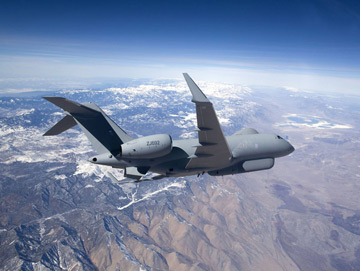
(Sentinel R1 - brand new, now permanently deployed to Afghanistan, to be scrapped in 2015)
The eagle-eyed amongst you will note that there is not heavy on land forces - the Army and Royal Marines were largely left alone until after the withdrawal from Afghanistan that has been pencilled in for 2014. This will move the subsequent pain for them until the defence review after the 2015 election. And this ignore the 40,000 MoD civil servants and 22,000 servicemen and women who will lose their jobs in the next three years, along with a slew of new programmes.
(Truth is stranger than fiction...)
SDSR Process
So how did this happen? And why were such apparently random choices made, such that the RN will have one and a spare aircraft carrier, (with no aircraft - cunning, huh?), and the RAF has so many PFI-funding air refuelling tankers that they will have nearly two per fast-jet squadron? Some of the answer will be in the process.
It was long suspected, but Chalmers' paper is the first time that I've seen it (semi-officially) confirmed that the MoD was deeply engaged in Op OSTRICH, ignoring the HM Treasury's (HMT) request that all Departments study the impact of 10% and 20% cuts in their budgets. Until the last three weeks of the Review, MoD appears to have had a single case of 3% cut, and MoD
"believed – or at least hoped – that the Treasury was bluffing, and presented no detailed plan for how to make steeper reductions."**
Ah. Taking on HMT in a game of chicken is always a cunning plan. They will blink! Until they don't. Oh. The effect was predictable... Chalmers again:
"... [this] had the effect of increasing total ten-year required savings by £17 billion. This not only required much deeper savings in 2013/14 and 2014/15, a challenge which the MoD has still not fully been able to meet. As importantly, it reduced the baseline for spending levels for the rest of the decade."***
The MoD may cry foul and grumble about mixed political messages, but the reality is that probably didn't believe things could get this bad, and the culture in the MoD meant that the level of prioritisation that would've been required simply didn't exist, as the subsequent Levene Review into Defence management found. This set the stage for the final stages of the SDSR debacle.
(They have to agree as well, you know....)
SDSR Endgame
Chalmers recounts the MoD's long term plan to meet the Treasury's numbers was intertwined with the repatriation of the Army units from Germany. This would've seen the Army reduced by 20,000 to 82,000 by 2020 primarily by withdrawing from Germany without replacing those numbers - the point being that building a significantly increased infrastructure for the returning Army units would have been prohibitively expensive, which is the primary reason that it hasn't happened since the end of the Cold War. An elegant administrative solution.
Except that Number 10 didn't buy it.
Essentially, No 10 wouldn't go for cuts in the Army whilst there was a war on in Afghanistan. In fact, there were some cuts - 7% of the Army's regular strength to 95,000 by 2015 - but the weight of the cuts went on the RN (14% personnel cuts) and the RAF (17%). It was also in this end game that Nimrod / LRMPA and Carrier Strike (HMS ARK ROYAL and the Harrier GR9s) were binned without replacement. There is reportage that this was all a last minute fix to save the Tornado GR4 strike aircraft instead of the Harrier GR9s achieved by an RAF end-run, but even if true, in operational terms it was probably the correct decision.
All that was left was for the senior leadership to trumpet the strategic nature of the SDSR. But the façade cracked under the internal contradictions - aircraft carrier minus aircraft, doing the same or more with less.
The bigger problem was that all of this pain still didn't close the £74bn gap. This would be the job of PR11, of which more shortly.
*I'm told it is possible to take a phot of a ship without it wiggling about at high speed, but as I was repeatedly told, (as your author is a slow learner) "Tobbes, what's the point of that?"
(6 Sqn RAF Typhoon* from RAF Leuchars: low, fast, agile. MoD budget: low.)
Against a backdrop of the Royal Navy's redundancies last week, there's been some interesting work coming out of the Royal United Services Institute (RUSI, MoD's favourite thinktank) this week from the estimable Malcolm Chalmers on defence spending. Prof. Chalmers' paper is here, and I'll comment on it in detail over the next few days.
The real questions remain around whether the budget is under control, and whether the reduced capability of the UK forces has been matched with a reduced level of political intent to use military force. (Oops. More complex, that.)
(£70,000 an hour. Before bombs. And tankers, radar planes and intelligence assets. Ouch.)
I have commented on the UK's 2010 Strategic Defence and Security Review (SDSR) many times on this blog. And as early as last summer, I was concerned that it was going to be a shambles. Not only had SDSR been rushed to meet a Spending Review deadline, but the level of strategic thinking on the UK's place in the world and desired international role was mostly evidenced by its absence - the all too predictable fuzzy thinking combined salami slicing cuts - trimming capabilities without addressing the cost base - with other capabilities falling between the services and being lost entirely - Nimrod MRA4 martime patrol aircraft, most obviously. And these very painful cuts at the same time as the UK insists on ploughing on with the £100bn replacement for the Trident nuclear system that seems entirely irrelevant.
Worse, the MoD engaged in its usual game of heroic budgetary assumptions, resulting in a £1bn deficit shortly after the publication of what purported to be the strategic planning document for the next decade. Why? Well, planning the budget around £500m of proceeds from a sale of Typhoon fighters to Oman before the deal was agreed probably didn't help. Especially as it is hasn't happened, and the Omani unrest of the Arab Spring leading to massive domestic spending commitments won't exactly have made it more likely.
(HMS CUMBERLAND in Benghazi in Malta shortly after having been in Benghazi. Poor drills - they've forgotten the "For Sale - Final Clearance" pennant.)
So now the MoD finds itself in the frankly absurd position that HMS YORK and HMS CUMBERLAND are patrolling of Libya and doing naval "stuff" - having been diverted on their way home for decommissioning. The Nimrod R1 electronic intelligence gathering aircraft has been extended in service through the summer instead of being binned at the end of March. And two of the UK's three little aircraft carriers (and all of their aircraft) have also been scrapped (though, in fairness, they'd not be especially useful in Libya).
I could go on. I'm sure you're all relieved to hear that I won't.
The question for the UK's political leadership the day before the Budget, is simple. When are the military-political leadership going to accept that either there are very significant limits to Britain's ambition and geo-political influence in the current budget, or that to maintain the current level of ambition requires a significantly larger budget?
Until they do, it's all going to be a half-arsed and good women and men will be exposed to unnecessary risk. Some may die.
(A good book. In fact, a great book - go read it.)
In part one and two of these random musings (do they qualify for capital R and capital M at this point? I leave that to you, dear reader...) we looked at the history and the future choices for the UK nuclear weapons. Now, enough of my quasi-academic pontification: what would I actually *do* if I were in charge? And Why?
The first point is that though the world is an unstable place with active proliferation attempts by non-nuclear States that are not UK or western-aligned, it is not clear that the Irans or North Koreas of this world have either the capability or intent to attack the UK with a nuclear armed missile, nor is it clear that they are not deterred by the US nuclear guarantee to NATO.
Really? What surely they're all crazy mullahs / mad Stalinists?
Well, let's assume that Iran successfully builds a nuclear weapon, and successfully integrates it with one of their current missile systems - e.g. Shahab-3 or the Ghadr-110, and then moved these missiles up to NW Iran, could they even hit the UK?
Courtesy of Great Circle Mapper (hours of fun!), here's the range of the 1200nm Shahab-3 (Meteor-3) from Tabriz:
And here's the 3,000km range of the Ghadhr-110:
As you can see, neither can hit the UK, though if they were accurate enough, they could hit Cyprus with the UK's Sovereign Base Areas. I've no idea of the Circular Error Probable over the 780nm from Tabriz to Akrotiri - but given that the Iranian attacks on Baghdad (and vice-versa) during the "War of the Cities" was not notably precise (not surprising as the SS-1 SCUD derivatives used - themselves derived from Hitler's WWII V-2 rockets - are prone to wander off by themselves), it is asking a lot of Iranian missile design to be able to develop a precision strike capability to hit Akrotiri today. As range increase, accuracy falls away sharply, so I would predict that hitting Rome with a Ghadhr-110 will be something of a crapshoot from Tabriz.
Of course, it is likely that given time, money and imported technology from wherever, the Iranians could produce a longer range missile. And according to Wikileaked US State Department cables, Iran has some 19 North Korean BM-25 Musudan missiles, with a range of 4,000km / 2,485 miles. Fired from Tabriz, BM-25 could, theoretically hit Heathrow 2,424 miles away.
(And no, this blog is not advocating urban regeneration of Hounslow and Feltham by Iranian missiles irrespective of how desirable such regeneration may be.)
All of which assumes that the Iranians and North Koreans would want to.
And that's the crux: If Iran had the capability, and was able to prepare and launch a BM-25 with a nuclear warhead against London, and did so, then Article V of the North Atlantic Treaty - all of that armed attack on one is an attack on all business - would presumably be invoked, and Iran would suffer a devastating US nuclear counter-attack.
So: one element of the rationale facing the UK in the £100bn like-for-like replacement of CASD by new SSBNs and Trident is that there may be some Iranian or other nutters who decide on national self-destruction, or who are going to nuke the UK and don't expect the US to shoot back. I would posit that the likelihood that the Iranians decided not to nuke London based on the UK SSBNs is in fact vanishingly small, as the Iranian and North Koreans are - just like the Soviets in the Cold War - focussed on the survival of the regime above all else. (So was Hosni Mubarak. Oops.) But nothing is going to overthrow the regime more surely than lobbing nuclear weapons on rockets at western cities - therefore, it isn't going to happen.
"Ah", I hear the realists cry "But these people are millenarian nutters for who death is not a problem." And thus they aren't rational.
Perhaps.
(V. I. Lenin. Old-skool millenarian nutter. Innit?)
There are two responses to this: first, that the Soviets were ostensibly (and officially) millenarian nutters who wanted to change the world, but yet they were deterred, largely by America's nuclear arsenal. Secondly, if these millenarian nutters are actually not rational, then presumably they can't be deterred, so the UK SSBNs are useless anyway. This second argument obviously also applies to the nightmare scenario of Al Qaeda getting its hand on a nuclear device - because they can't be deterred and they don't have any territory to nuke anyway.
Which leaves proponents of CASD replacement saying something like, "Well yes, but we might need it, and in any event we're a great power and need the accoutrements of Great Powerdom, like nuclear weapons." Which, all you astute readers out there will have noticed, is precisely the circular argument that this debate started with in 1946.
So actually neither argument supports the idea of replacing Trident with CASD. Hooray, we've just saved £100bn.
Or have we?
I think we probably have. My personal position is that there is no obvious, credible threat - threat comprising of technical capacity and intent - to the UK posed by nuclear weapons. Further, the £100bn - and the £20 - 30bn of capital costs over the next decade to replace the existing SSBNs - will totally distort an already badly stretched (read: broke) UK defence budget, and to go ahead with the SSBN replacement will mean that other, useful - and in some cases critical - capabilities will have to be cut to fund it. This is madness.
(WE177 - small. Large bang, however. Make sure you mean it before you let it off; unintentional detonations probably best avoided, and are likely to create lots of paperwork. Paperwork like this is always bad.)
So my solution?
Scrap Trident - indeed, bring the existing SSBNs in now and stand down CASD, saving the current operating costs. Retain the nuclear engineering knowhow and bomb-making capability at Aldermaston and Burghfield to provide technical expertise in disarmament and nuclear verification, and in extremis, the ability for the UK to fabricate an air-dropped nuclear weapon in 12-24 months - after all, the WE177 plans presumably still exist, and if requried, fabricating new weapons should only be an engineering task. In other words, the UK would assume a position similar to that of Japan - no weapons, but a clear technical breakout capability if required.
And this would also mark a coherent step towards nuclear disarmament, making the UK the first Permanent Member of the UN Security Council to give up deployed nuclear weapons.
Especially ones which reinforce my (sometimes strongly) held views about things. (And no, dear readers, not prejudices - analytical views!). And I have a stinking cold, slept all day and so can't sleep, hence blogging on this now.
So, over to our friends at the Daily Telegraph (I know, I know - rightwing claptrap etc etc):
Quelle surprise: Tom McKane's review team have written (and someone helpfully leaked) a mea culpa that conveniently blames the nascent UK NSC for the daft decisions, the rushed timelines and the no-briefing rules. All presumably correct and all entirely predictable, especially as this "Review" took as it's intellectual starting point the previous Secretary of State's (Rt Hon Robert "Comrade Bob" Ainsworth) "effort" at a Green Paper in January could politely be described as "anti-intellectual facile bullshit".
But this underscores the reason I've not blogged on the UK's Strategic Defence and Security Review (SDSR) - it's not strategic, and it's not a policy driven defence and security review; instead, it's a cash cuts lead review which has fundamentally unbalanced the UK's military capabilities, with far too strong a focus on big toys and not enough thought on what the UK is trying to achieve.
Specifics: Binning Nimrod MRA 4 and the UK's fixed wing anti-submarine maritime patrol aircraft to save £200m p.a. at a time of increased hostile submarine operations and without credible search and rescue alternatives is abysmal, and will cost lives. Ignore the £3.5bn already spent - such sunk costs are sunk - it is a capability that the UK needed and which will be sorely missed, especially as the number of frigates and destroyers (FF/DD) are reduced (again).....
FF/DDs to 19 hulls. Which means that approximately 12-14 can expect to be ready for use at most times, and which compares poorly with the 32 that were required as a minimum in 1998's SDR. Has the RN's tasking fallen by more than a third since '98? Hardly, though their presence on the world's oceans has. But these cuts allowed the Aircraft Carrier programme to proceed......
Ah yes, the Carrier programme.... c. £6bn for two ships, one of which will almost certainly never operate British fixed-wing aircraft as the Harriers are being scrapped (a good choice in a poor document), and the other of which may operate F-35C JSFs from 2020 (another good choice if the money is ever there). But neither of these behemoths will (even if shared with the French) actually be of any use if they can't be protected, and the assets required to protect them (FF/DD, Airborne Early Warning aircraft, Maritime Patrol Aircraft, Attack Submarines) have all had their numbers cut, in some cases to zero. Oops.
And then there's UK's nuclear pretensions with Trident. A subject for another post.
So, why is the UK's SDSR like the Ground Zero Mosque? Because like that project, it's neither Strategic, nor about defence and security. Unlike Park 51 (aka the Ground Zero Mosque - which let's remember, is neither at Ground Zero nor is it a mosque), SDSR is a bad idea, and constitutes a massive missed opportunity for the UK, which will take a decade or more to work through.
The UK is undergoing a Strategic Defence and Security Review (SDSR) at the moment. What the SDSR should do is provide an analysis of what the UK’s place in the world is, what role the UK aspires to have, and how much the UK is prepared to spend to achieve this. This includes deciding how to spend money between the Ministry of Defence (MoD), the Foreign and Commonwealth Office (FCO), the intelligence agencies and, potentially, the Department for International Development (DfID).
Naturally, how much you want to spend is pretty important. Portugal at the end of the Salazar / Caetano dictatorship spent 40% of the total Portuguese budget on the colonial wars in Africa, whereas Germany (1.3% of GDP) and Japan (0.9% of GDP) demonstrate that the level of defence spending is all about political choices. And of course with the 1974 Portuguese Revolution, the wars abroad ended, and defence spending fell quickly. So, in a spirit of titanic modesty, I want to scribble some thoughts on what I would put into SDSR over the next few days.
First up, the UK’s place in the world.
What are the UK’s long-term interests? Foreign policy has been largely bipartisan, and somewhat timeless. It was Lord Palmerston who opined in 1848 that:
‘We have no eternal allies, and we have no perpetual enemies. Our interests are eternal and perpetual, and those interests it is our duty to follow.’
This is good news if it means that this is an area of public policy that is amenable to long-term planning. It would be much healthier if we were politically able to have a cross-party planning process, but even in this era of coalition building, this appears to be a bridge too far. Nonetheless, what do I think are the UK’s long-term interests?
1. It’s the economy, stupid.
Bill Clinton was spot on in the ’92 Presidential Race – if you can’t get the economy moving and provide a credible plan to eliminate the deficit, then it’s all going to end in tears. (See Portugal, above).
Put crudely, the British military is not self-funding – and therefore it relies on a strong economy to pay for it through taxation. And so for the remainder of the UK’s international position – diplomacy, aid, spooks.
What does this mean in concrete terms? For me, it means that a key role of the Foreign Office is to promote British commercial interests abroad – with a key focus being about strengthening the international legal protections for the UK’s service industries as well as promoting physical UK exports. Given that the current rules of the international trade are a largely Anglo-American production, we need to extend enforcement and to ensure that efforts to roll back liberalisation are tackled and defeated. In this, the appointment of Simon Fraser as the professional head of the FCO is timely and welcome, given his background in trade policy - normally a comparatively less important policy area (http://www.fco.gov.uk/en/news/latest-news/?view=News&id=22577659).
What do the military contribute to the economy? Well, the obvious is some £14bn of public spending on “stuff” with private companies. And though the days of Gun Boat Diplomacy are ostensibly over (much to the disappointment of some Naval Service Officers of my acquaintance), the role of UK forces in increasing international stability and ensuring freedom of navigation worldwide is an indirect economic benefit.
But no-one would claim that the military should be used as an economic stimulus – even the UK defence lobby’s study last summer inadvertently showed that stimulus should be spent on construction or biochemistry. Critically, we should dismiss the argument that placing military equipment orders in the UK is a sensible use for economic stimulus as the things you build cannot realistically support the UK economy after they are completed, unlike a new railway or an upgraded trunk road.
2. We are international traders.
The UK’s wealth has come from trade of things, ideas and services. This means that we must be forward and outward looking – isolationism is simply not an option. This means that we must be fully engaged with the EU as our largest market and that we need to engage with the outside world to ensure that UK firms and UK-based taxpayers have the best possible shot at winning business.
3. We are a Status Quo power. No, not prog rock. The UK has been a player on the international scene since the before the Norman Conquest. It is also party to the world’s oldest alliance Treaty still in effect – the 1386 Treaty of Windsor, which seals the UK’s alliance with Portugal.
With such a history, today’s UK policy planners build on several hundred years’ diplomatic effort to cement the UK’s international influence in good times and to hold onto these gains in barren periods. After all, it could be argued that the British Isles are a rather wet and gloomy group of islands perched precariously off the north west coast of Europe.
And no generation did better than the WWII generation in bequeathing us Permanent Membership of the Security Council, 4.85% of the votes at the IMF and a Director (currently Alex Gibbs), a slew of politico-military posts in NATO, including the Number 2 (Deputy Supreme Allied Commander Europe, DSACEUR), and a British Judge on the International Court of Justice (currently Christopher Greenwood).
This is tremendously helpful, as it is disproportionate to the UK’s actual level of international economic and military clout. But it is a double-edged sword given that the UK’s optimal position is to keep the institutional structures legitimate whilst retaining as much UK influence as possible. My thinking is that this means that we need to be seen to be a leading proponent of reform to ensure that we can play a leading role in defining the terms of reform.
The cause celebre is UN Security Council reform that will (at some point) increase the number of Permanent Members to include some of Brazil, Germany, India, Japan and maybe Nigeria or South Africa. In order for the Council to operate effectively, it is as inconceivable that the new Permanent Members would gain vetoes as it would be that the existing Permanent Members would give their vetoes up – which they would have to vote for. Therefore, fear not – the UK will never be forced to give up its Security Council veto.
And so with the institutional and legal structure – it’s strongly in our favour, so we need to defend it by ensuring it’s legitimacy by supporting incremental reform on our terms - and the main route to this is to underpin the existing international legal order.
Conclusions Public spending will be constrained as the UK undertakes a fiscal repair job over the next five years; the international affairs portfolio will bear cuts along with the rest of Government. But the real challenge will be to focus on the long-term national interest, which is to reinforce the UK’s existing systemic advantages by underpinning the legitimacy of the overall system.
In our next instalment, we’ll look at the numbers.
Well, here we are. I started this blog back in 2008, and never did anything with it - and when I did think about doing something with it, I was constrained by work.
So, in the spirit of fresh starts, here's a new blog.
What do I want to cover? Well, it's going to reflect public policy issues and international law, and we'll start with an analysis of the ICJ Kosovo decision over the weekend, and then move onto an assessment of the UK's options in the on-going Strategic Defence and Security Review (SDSR).
I don't really have any idea whether anyone will read these musings, but if you've got this far, thank-you, and I hope to turn it into a place for conversation.